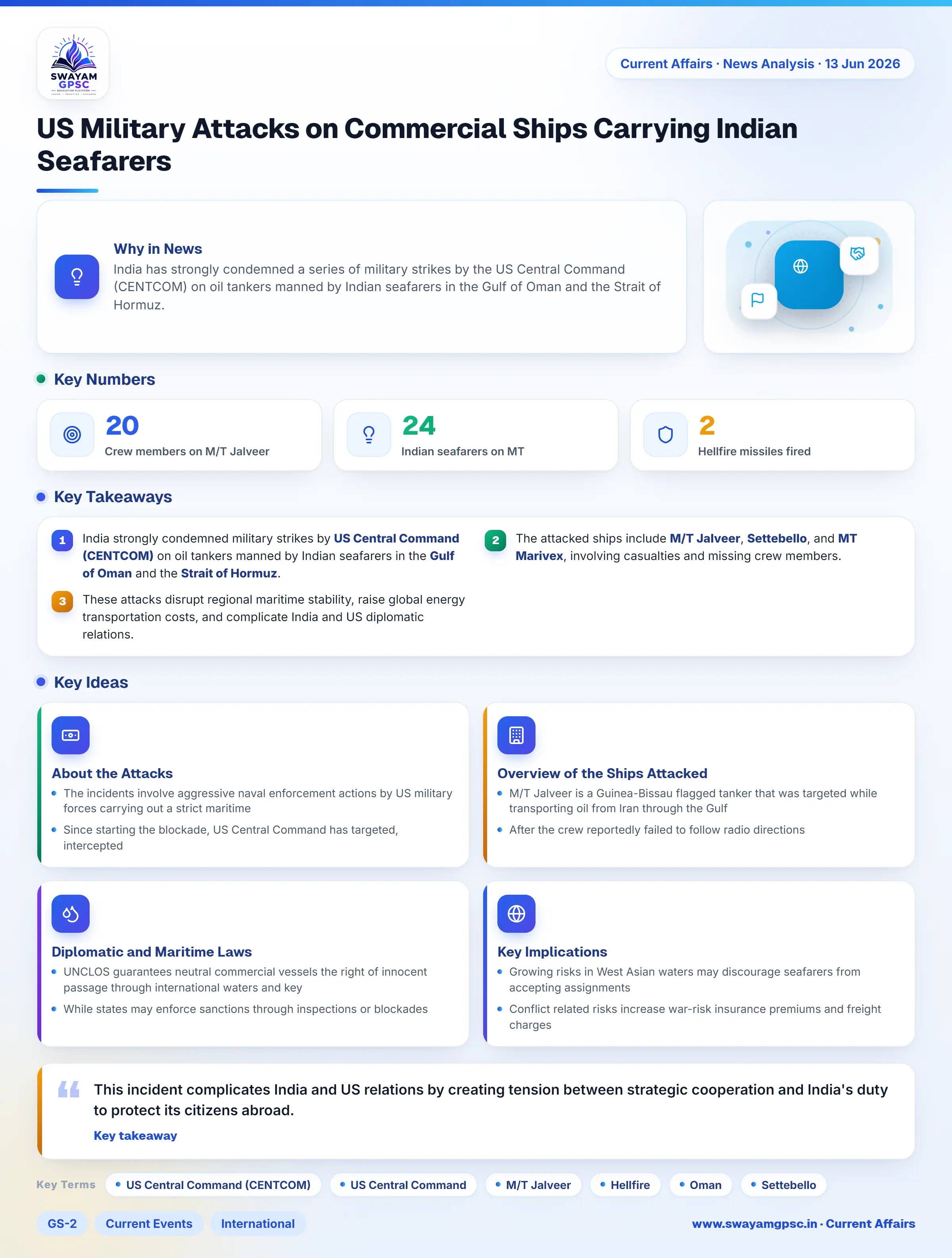
US Military Attacks on Commercial Ships Carrying Indian Seafarers
#GS-2 #Current Events #International #Economy #Infrastructure #India and US Relations #Maritime Security
Key takeaways
- India strongly condemned military strikes by US Central Command (CENTCOM) on oil tankers manned by Indian seafarers in the Gulf of Oman and the Strait of Hormuz.
- The attacked ships include M/T Jalveer, Settebello, and MT Marivex, involving casualties and missing crew members.
- These attacks disrupt regional maritime stability, raise global energy transportation costs, and complicate India and US diplomatic relations.
Why in News
- India has strongly condemned a series of military strikes by the US Central Command (CENTCOM) on oil tankers manned by Indian seafarers in the Gulf of Oman and the Strait of Hormuz.
About the Attacks
- The incidents involve aggressive naval enforcement actions by US military forces carrying out a strict maritime blockade against Iranian energy exports.
- Since starting the blockade, US Central Command has targeted, intercepted, and fired upon non-compliant commercial vessels attempting to move through regional waters with Iranian petroleum products.
Overview of the Ships Attacked
- M/T Jalveer is a Guinea-Bissau flagged tanker that was targeted while transporting oil from Iran through the Gulf of Oman.
- After the crew reportedly failed to follow radio directions, a US aircraft fired two Hellfire missiles directly into the engine room and disabled the vessel.
- Five of its 20 crew members were rescued by passing ships and brought to Oman.
- Settebello is a Palau flagged oil tanker that was targeted by US forces off the Omani coast while allegedly trying to break the American blockade.
- This assault caused a massive fire, and three Indian national crew members were declared dead or missing.
- MT Marivex is an oil tanker carrying 24 Indian seafarers that caught fire south of the strategic Strait of Hormuz after being targeted by US naval forces.
Diplomatic and Maritime Laws
- UNCLOS guarantees neutral commercial vessels the right of innocent passage through international waters and key straits to protect lawful maritime trade and civilian shipping.
- While states may enforce sanctions through inspections or blockades, using lethal force against neutral civilian vessels raises serious concerns under established maritime law.
- Summoning a foreign diplomat is a formal diplomatic protest, which shows serious concern while keeping channels open for peaceful dialogue and resolving disputes.
Key Implications
- This incident complicates India and US relations by creating tension between strategic cooperation and India's duty to protect its citizens abroad.
- Growing risks in West Asian waters may discourage seafarers from accepting assignments, leading to workforce shortages and higher shipping costs.
- Conflict related risks increase war-risk insurance premiums and freight charges, which can raise global energy transportation and import costs.