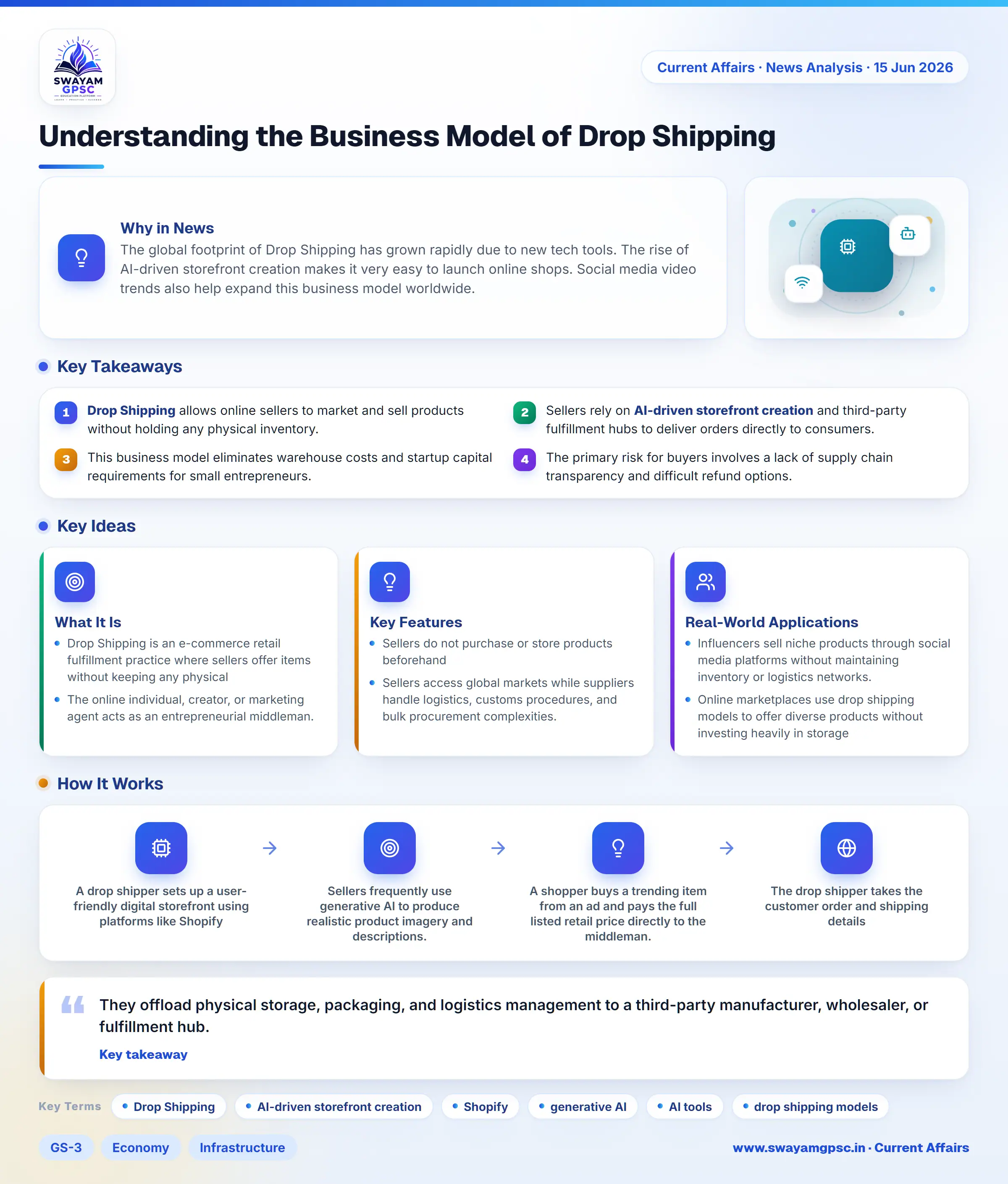
Understanding the Business Model of Drop Shipping
#GS-3 #Economy #Infrastructure #E-Commerce #Technology
Key takeaways
- Drop Shipping allows online sellers to market and sell products without holding any physical inventory.
- Sellers rely on AI-driven storefront creation and third-party fulfillment hubs to deliver orders directly to consumers.
- This business model eliminates warehouse costs and startup capital requirements for small entrepreneurs.
- The primary risk for buyers involves a lack of supply chain transparency and difficult refund options.
Why in News
- The global footprint of Drop Shipping has grown rapidly due to new tech tools.
- The rise of AI-driven storefront creation makes it very easy to launch online shops.
- Social media video trends also help expand this business model worldwide.
What It Is
- Drop Shipping is an e-commerce retail fulfillment practice where sellers offer items without keeping any physical inventory in stock.
- The online individual, creator, or marketing agent acts as an entrepreneurial middleman.
- They offload physical storage, packaging, and logistics management to a third-party manufacturer, wholesaler, or fulfillment hub.
How It Works
- A drop shipper sets up a user-friendly digital storefront using platforms like Shopify, Instagram Professional accounts, or specialized web domains.
- Sellers frequently use generative AI to produce realistic product imagery and descriptions.
- A shopper buys a trending item from an ad and pays the full listed retail price directly to the middleman.
- The drop shipper takes the customer order and shipping details, forwarding them to a third-party domestic or international wholesaler or manufacturer.
- The drop shipper pays the wholesale cost of the item to the supplier using the customer funds.
- The supplier packages and ships the product directly to the end consumer, bypassing the middleman completely.
- The drop shipper pockets the net financial margin between the retail price and the wholesale cost, minus digital advertising expenses.
Key Features
- Sellers do not purchase or store products beforehand, eliminating warehouse costs and reducing startup capital requirements.
- Sellers access global markets while suppliers handle logistics, customs procedures, and bulk procurement complexities.
- AI tools automate trend analysis, customer support, inventory monitoring, and marketing operations to improve efficiency.
- Customers often cannot identify the actual manufacturer, making product origin and authenticity difficult to verify.
- Some sellers provide support services, but unreliable stores may disappear, leaving customers without refund options.
Real-World Applications
- Influencers sell niche products through social media platforms without maintaining inventory or logistics networks.
- Online marketplaces use drop shipping models to offer diverse products without investing heavily in storage facilities.
- Marketers quickly launch stores around viral products, profiting before consumer demand declines.
- Entrepreneurs monetize expertise by selling courses, supplier lists, and software related to drop-shipping businesses.