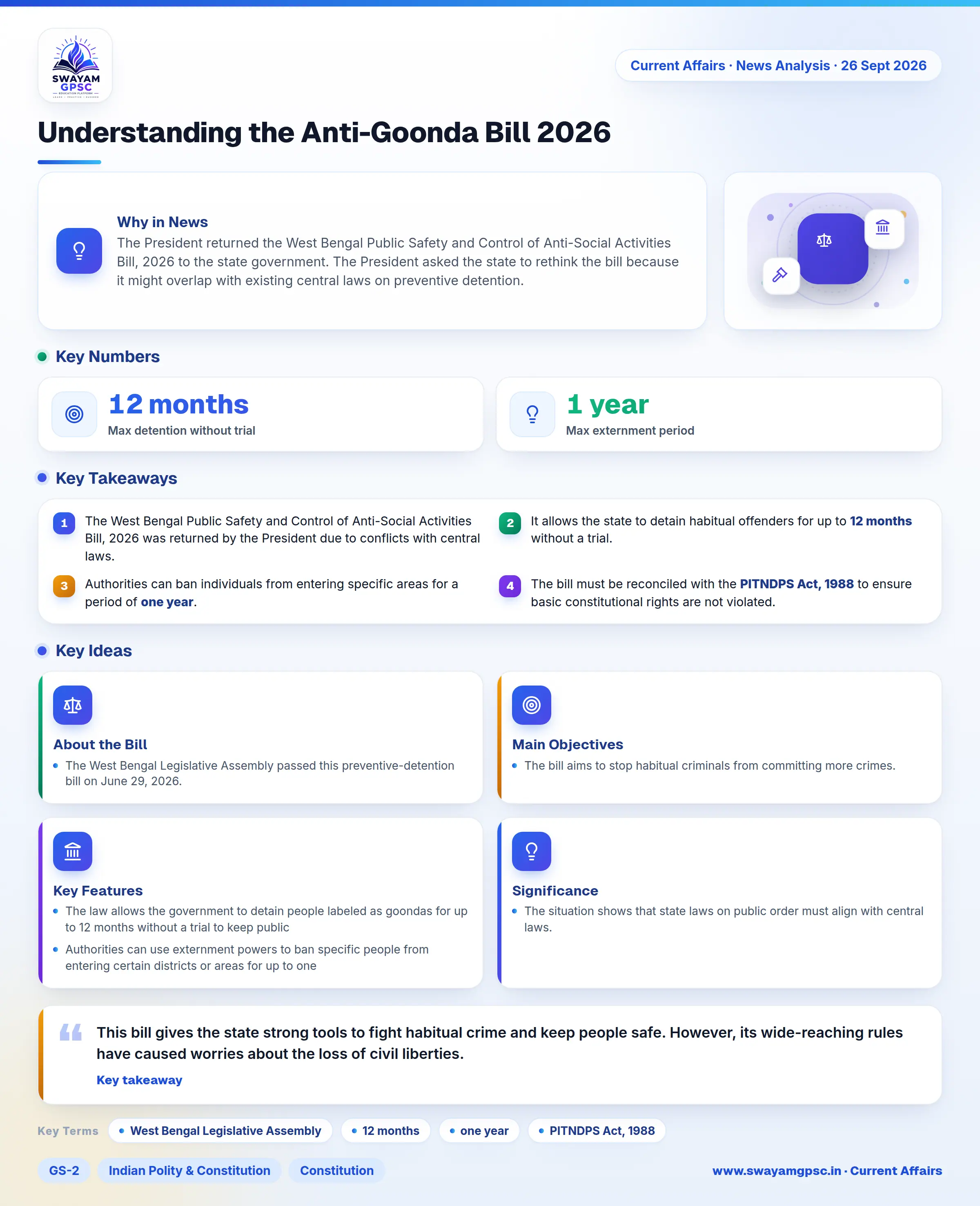
Understanding the Anti-Goonda Bill 2026
#GS-2 #Indian Polity & Constitution #Constitution #Federalism #Governance & Social Justice #Current Events #National #GS-3 #Economy #Infrastructure #Internal Security #GS-4 #Ethics #Accountability
Key takeaways
- The West Bengal Public Safety and Control of Anti-Social Activities Bill, 2026 was returned by the President due to conflicts with central laws.
- It allows the state to detain habitual offenders for up to 12 months without a trial.
- Authorities can ban individuals from entering specific areas for a period of one year.
- The bill must be reconciled with the PITNDPS Act, 1988 to ensure basic constitutional rights are not violated.
Why in News
- The President returned the West Bengal Public Safety and Control of Anti-Social Activities Bill, 2026 to the state government. The President asked the state to rethink the bill because it might overlap with existing central laws on preventive detention.
About the Bill
- The West Bengal Legislative Assembly passed this preventive-detention bill on June 29, 2026. It targets people who repeatedly commit crimes and those who threaten public peace. This law allows the state to detain people without a trial and stop them from entering certain areas.
Main Objectives
- The bill aims to stop habitual criminals from committing more crimes. It focuses on maintaining public order and protecting people from violence, threats, and illegal land grabbing.
Key Features
- The law allows the government to detain people labeled as goondas for up to 12 months without a trial to keep public order.
- Authorities can use externment powers to ban specific people from entering certain districts or areas for up to one year.
- The bill defines anti-social activities very broadly. This includes repeating crimes, threatening the public, illegal mining, and endangering lives or property.
- Officers have strong powers to search and seize items. It is a crime to hide people who are detained or banned, and these offenses are non-bailable.
- Government officials get legal protection. They cannot be sued for actions taken in good faith while implementing this law.
Significance
- This bill gives the state strong tools to fight habitual crime and keep people safe. However, its wide-reaching rules have caused worries about the loss of civil liberties.
- The situation shows that state laws on public order must align with central laws. For example, it needs to be consistent with the PITNDPS Act, 1988, while still protecting the basic rights of citizens.