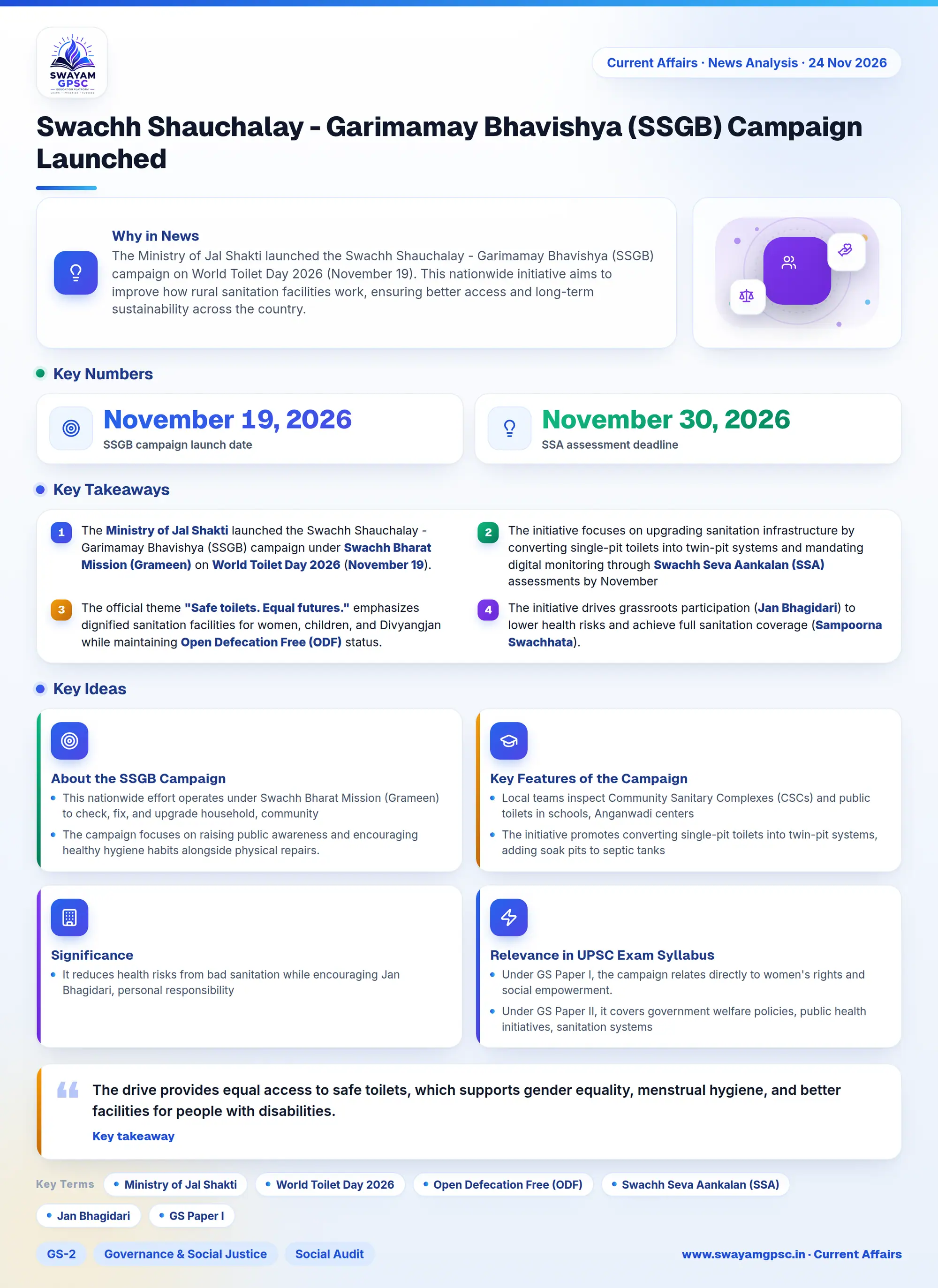
Swachh Shauchalay - Garimamay Bhavishya (SSGB) Campaign Launched
#GS-2 #Governance & Social Justice #Social Audit #GS-3 #Environment #Sustainable Development #GS-1 #Indian Society #Women #Social Justice #Vulnerable Sections #GS-4 #Ethics #Accountability #National
Key takeaways
- The Ministry of Jal Shakti launched the Swachh Shauchalay - Garimamay Bhavishya (SSGB) campaign under Swachh Bharat Mission (Grameen) on World Toilet Day 2026 (November 19).
- The initiative focuses on upgrading sanitation infrastructure by converting single-pit toilets into twin-pit systems and mandating digital monitoring through Swachh Seva Aankalan (SSA) assessments by November 30, 2026.
- The official theme "Safe toilets. Equal futures." emphasizes dignified sanitation facilities for women, children, and Divyangjan while maintaining Open Defecation Free (ODF) status.
- The initiative drives grassroots participation (Jan Bhagidari) to lower health risks and achieve full sanitation coverage (Sampoorna Swachhata).
Why in News
- The Ministry of Jal Shakti launched the Swachh Shauchalay - Garimamay Bhavishya (SSGB) campaign on World Toilet Day 2026 (November 19).
- This nationwide initiative aims to improve how rural sanitation facilities work, ensuring better access and long-term sustainability across the country.
About the SSGB Campaign
- This nationwide effort operates under Swachh Bharat Mission (Grameen) to check, fix, and upgrade household, community, and institutional toilets.
- The campaign focuses on raising public awareness and encouraging healthy hygiene habits alongside physical repairs.
- The official theme for World Toilet Day 2026 is "Safe toilets. Equal futures."
- The main goal is to deliver safe and dignified sanitation access for everyone, especially women, schoolgirls, and persons with disabilities, while keeping villages Open Defecation Free (ODF).
Key Features of the Campaign
- Local teams inspect Community Sanitary Complexes (CSCs) and public toilets in schools, Anganwadi centers, and Panchayat buildings to complete required repairs.
- The initiative promotes converting single-pit toilets into twin-pit systems, adding soak pits to septic tanks, and using machines to clean out sludge safely.
- It sets up stronger community systems to maintain toilets while using local art, clear signs, and clean surroundings to take pride in public facilities.
- The program encourages daily toilet use, regular handwashing, and four-way waste sorting through targeted outreach, with special focus on women, children, and Divyangjan.
- States and Union Territories must use a new digital tracking module and finish all pending Swachh Seva Aankalan (SSA) reviews by November 30, 2026.
Significance
- The drive provides equal access to safe toilets, which supports gender equality, menstrual hygiene, and better facilities for people with disabilities.
- It reduces health risks from bad sanitation while encouraging Jan Bhagidari, personal responsibility, and community action to reach Sampoorna Swachhata.
Relevance in UPSC Exam Syllabus
- Under GS Paper I, the campaign relates directly to women's rights and social empowerment.
- Under GS Paper II, it covers government welfare policies, public health initiatives, sanitation systems, and support for vulnerable groups.
- Under GS Paper III, it connects to waste management programs, environmental pollution control, and sustainable development goals.
- Under GS Paper IV, it links to fundamental human dignity, public responsibility, positive behavioral change, and community participation.