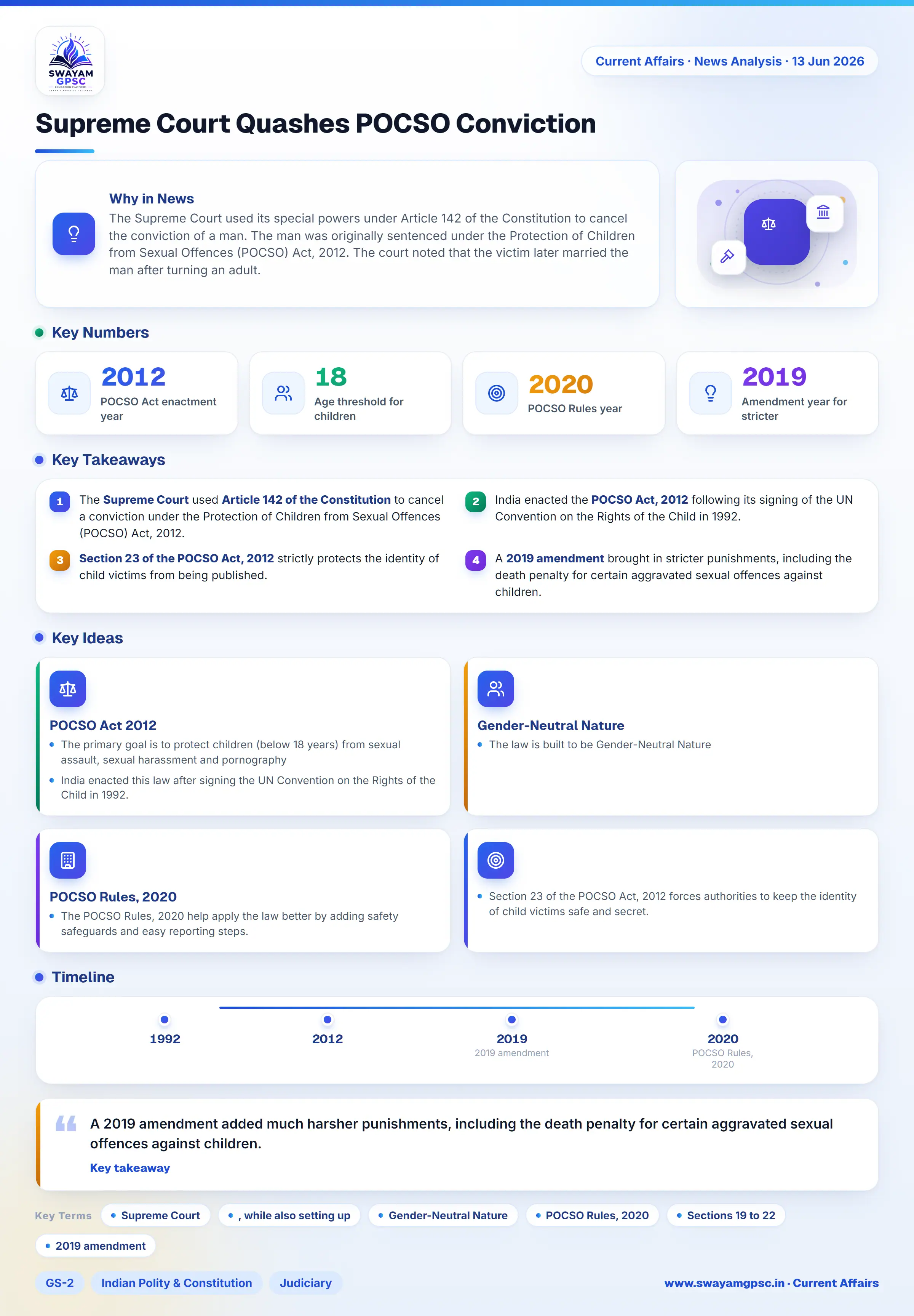
Supreme Court Quashes POCSO Conviction
#GS-2 #Indian Polity & Constitution #Judiciary #Constitutional Bodies #Vulnerable Sections #Current Events #National
Key takeaways
- The Supreme Court used Article 142 of the Constitution to cancel a conviction under the Protection of Children from Sexual Offences (POCSO) Act, 2012.
- India enacted the POCSO Act, 2012 following its signing of the UN Convention on the Rights of the Child in 1992.
- Section 23 of the POCSO Act, 2012 strictly protects the identity of child victims from being published.
- A 2019 amendment brought in stricter punishments, including the death penalty for certain aggravated sexual offences against children.
Why in News
- The Supreme Court used its special powers under Article 142 of the Constitution to cancel the conviction of a man.
- The man was originally sentenced under the Protection of Children from Sexual Offences (POCSO) Act, 2012.
- The court noted that the victim later married the man after turning an adult.
POCSO Act 2012
- The primary goal is to protect children (below 18 years) from sexual assault, sexual harassment and pornography, while also setting up child-friendly procedures for trials.
- India enacted this law after signing the UN Convention on the Rights of the Child in 1992.
- The law is built to be Gender-Neutral Nature, meaning both girls and boys can be victims and the abuse remains a crime regardless of gender.
- The POCSO Rules, 2020 help apply the law better by adding safety safeguards and easy reporting steps.
- Section 23 of the POCSO Act, 2012 forces authorities to keep the identity of child victims safe and secret.
- Media reports cannot share any details like names or addresses that might expose the victim.
- Sections 19 to 22 make it compulsory for anyone who suspects or knows about abuse to report it immediately.
- The law gives different punishments based on how bad the crime is.
- A 2019 amendment added much harsher punishments, including the death penalty for certain aggravated sexual offences against children.