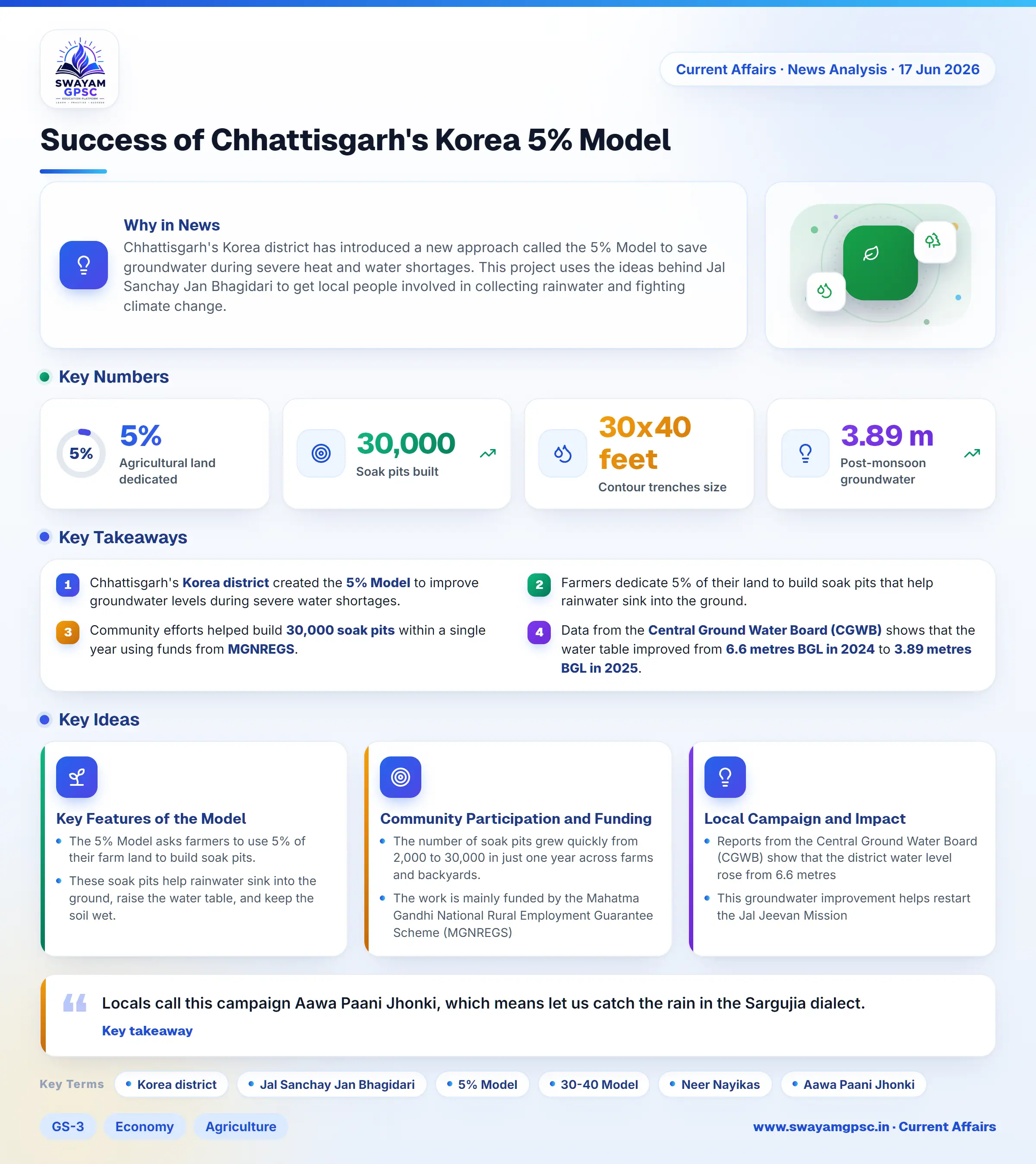
Success of Chhattisgarh's Korea 5% Model
#GS-3 #Economy #Agriculture #Infrastructure #Environment #Conservation of Resources #Water Resources #Rapid Fire CA #Quick Facts For Prelims
Key takeaways
- Chhattisgarh's Korea district created the 5% Model to improve groundwater levels during severe water shortages.
- Farmers dedicate 5% of their land to build soak pits that help rainwater sink into the ground.
- Community efforts helped build 30,000 soak pits within a single year using funds from MGNREGS.
- Data from the Central Ground Water Board (CGWB) shows that the water table improved from 6.6 metres BGL in 2024 to 3.89 metres BGL in 2025.
Why in News
- Chhattisgarh's Korea district has introduced a new approach called the 5% Model to save groundwater during severe heat and water shortages.
- This project uses the ideas behind Jal Sanchay Jan Bhagidari to get local people involved in collecting rainwater and fighting climate change.
Key Features of the Model
- The 5% Model asks farmers to use 5% of their farm land to build soak pits.
- These soak pits help rainwater sink into the ground, raise the water table, and keep the soil wet.
- A second plan called the 30-40 Model involves digging trenches measuring 30 feet by 40 feet on empty land to stop rainwater from running away.
Community Participation and Funding
- The number of soak pits grew quickly from 2,000 to 30,000 in just one year across farms and backyards.
- The work is mainly funded by the Mahatma Gandhi National Rural Employment Guarantee Scheme (MGNREGS), which is also known locally as the Viksit Bharat-Guarantee for Rozgar and Ajeevika Mission (Gramin).
- Women leaders called Neer Nayikas teach families about saving water, while youth volunteers known as Jal Doots help map water areas and clean old water channels.
Local Campaign and Impact
- Locals call this campaign Aawa Paani Jhonki, which means let us catch the rain in the Sargujia dialect.
- Reports from the Central Ground Water Board (CGWB) show that the district water level rose from 6.6 metres Below Ground Level (BGL) in 2024 to 3.89 metres BGL in 2025 after the monsoon.
- This groundwater improvement helps restart the Jal Jeevan Mission, which had stopped working in these villages because the wells were dry.