The Satpura-Melghat Tiger Corridor: Ecological Connectivity and Challenges
#GS-3 #Environment #Biodiversity #Wildlife #Geography #GS-1 #Culture #Tribal Culture #GS-2 #Current Events #National
Key takeaways
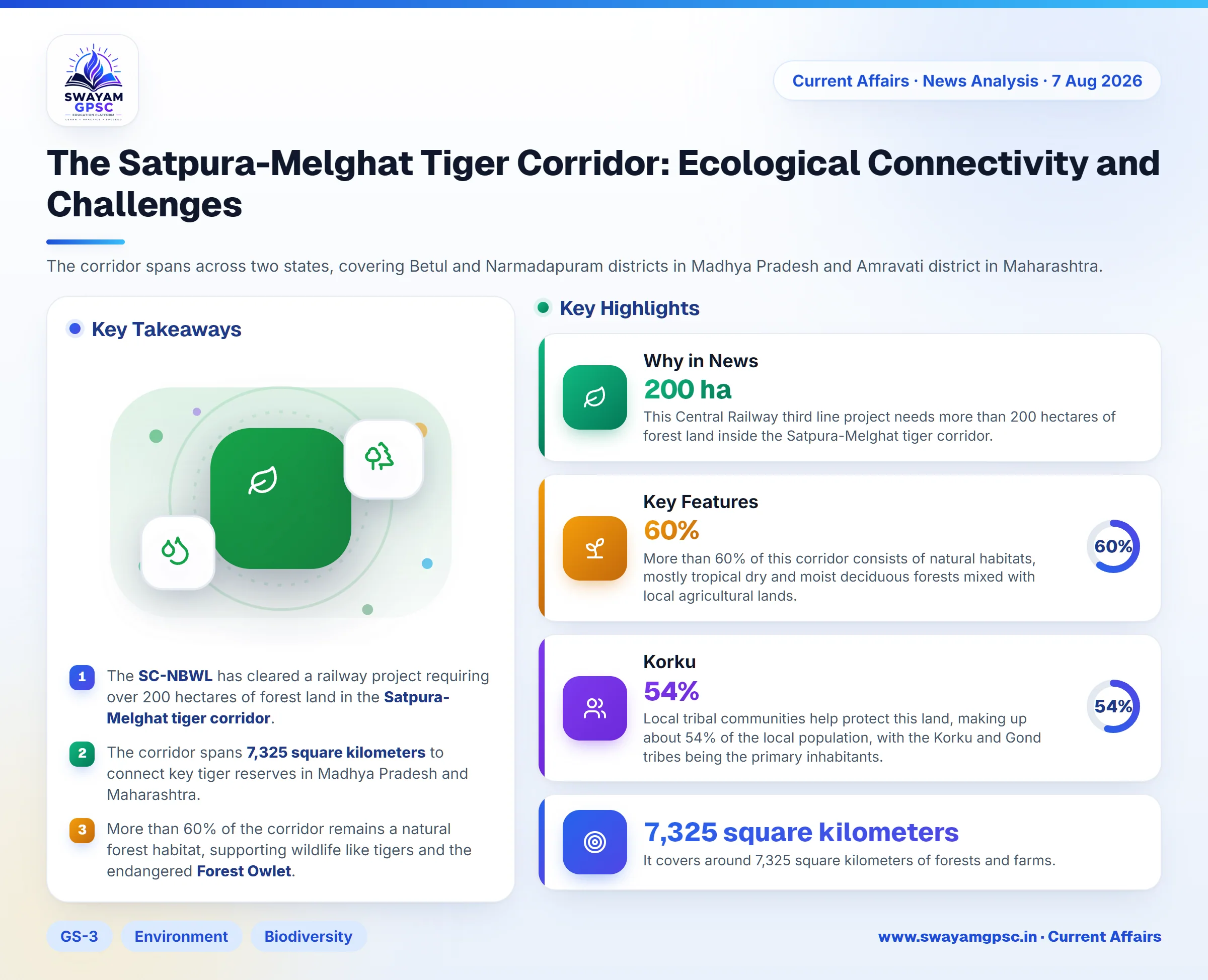
- The SC-NBWL has cleared a railway project requiring over 200 hectares of forest land in the Satpura-Melghat tiger corridor.
- The corridor spans 7,325 square kilometers to connect key tiger reserves in Madhya Pradesh and Maharashtra.
- More than 60% of the corridor remains a natural forest habitat, supporting wildlife like tigers and the endangered Forest Owlet.
- Indigenous tribal communities, mainly Korku and Gond, make up 54% of the local population in this corridor.
Why in News
- The Standing Committee of the National Board for Wildlife (SC-NBWL) recently gave preliminary approval for a railway project.
- This Central Railway third line project needs more than 200 hectares of forest land inside the Satpura-Melghat tiger corridor.
What is the Satpura-Melghat Tiger Corridor
- This corridor is an important natural land bridge in Central India.
- It covers around 7,325 square kilometers of forests and farms.
- It links the tiger populations of the Satpura Tiger Reserve in Madhya Pradesh with the Melghat Tiger Reserve in Maharashtra.
Geographic Location and Range
- The corridor spans across two states, covering Betul and Narmadapuram districts in Madhya Pradesh and Amravati district in Maharashtra.
- This network links several protected areas including Satpura National Park, Bori Sanctuary, and Pachmarhi Sanctuary in Madhya Pradesh.
- It also connects the Gugamal National Park, Wan, Narnala, and Ambabarwa sanctuaries in Maharashtra.
Key Features
- More than 60% of this corridor consists of natural habitats, mostly tropical dry and moist deciduous forests mixed with local agricultural lands.
- Many important animals use this path to travel, including the Tiger, Leopard, Sloth Bear, Striped Hyena, and the endangered Forest Owlet.
- Local tribal communities help protect this land, making up about 54% of the local population, with the Korku and Gond tribes being the primary inhabitants.
- The corridor acts as a major hub for wildlife networks, connecting with other important passages like the Satpura-Pench and Melghat-Bor corridors.
Challenges
- Expanding transport networks put heavy pressure on this natural habitat.
- Projects like the Jujharpur-Chichonda railway expansion and state highways increase human interference in this wildlife zone.
Significance of the Corridor
- The corridor allows tigers to move safely between isolated reserves, preventing genetic inbreeding and helping animals find new territories across Central India.
- It protects the continuous forest cover across the Satpura and Gawilgarh hill ranges, which secures water sources, reduces human-wildlife conflict, and keeps the regional ecosystem healthy.