Pyre Protest Against Ken-Betwa Link Project Delays
#GS-2 #GS-3 #Governance & Social Justice #Vulnerable Sections #Infrastructure #Environment #Wildlife #Tribal Rights #Ken-Betwa Link Project #Madhya Pradesh
Why in News
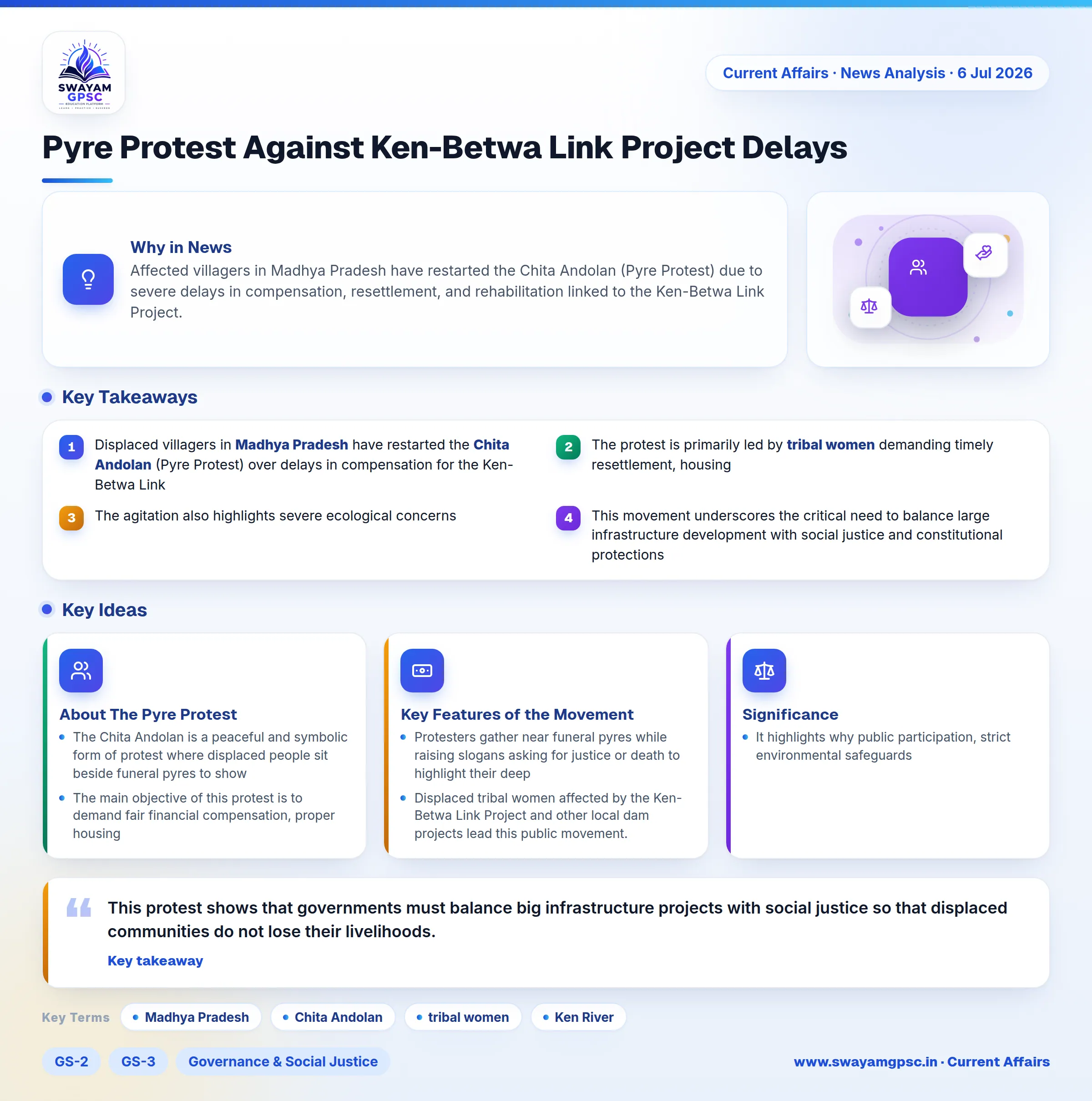
- Affected villagers in **Madhya Pradesh** have restarted the **Chita Andolan** (Pyre Protest) due to severe delays in compensation, resettlement, and rehabilitation linked to the **Ken-Betwa Link Project**.
About The Pyre Protest
- The **Chita Andolan** is a peaceful and symbolic form of protest where displaced people sit beside funeral pyres to show that losing their land, homes, and livelihoods feels like social death.
- The main objective of this protest is to demand fair financial compensation, proper housing, and timely resettlement for families displaced by large development projects.
Key Features of the Movement
- Protesters gather near funeral pyres while raising slogans asking for justice or death to highlight their deep emotional and economic distress.
- Displaced **tribal women** affected by the **Ken-Betwa Link Project** and other local dam projects lead this public movement.
- Displaced families state that authorities are delaying compensation packages and starting forced demolitions before completing proper resettlement.
- The movement focuses on environmental damages as well, such as forest destruction, harm to the **Ken River**, and threats to the **Panna Tiger Reserve**.
Significance
- This protest shows that governments must balance big infrastructure projects with social justice so that displaced communities do not lose their livelihoods.
- It highlights why public participation, strict environmental safeguards, and constitutional rights for tribal communities must remain central to national planning.