Project Nimbus and Big Tech Controversies
#GS-2 #GS-3 #Current Events #International #Science & Technology #Artificial Intelligence #Economy #Infrastructure
Key takeaways
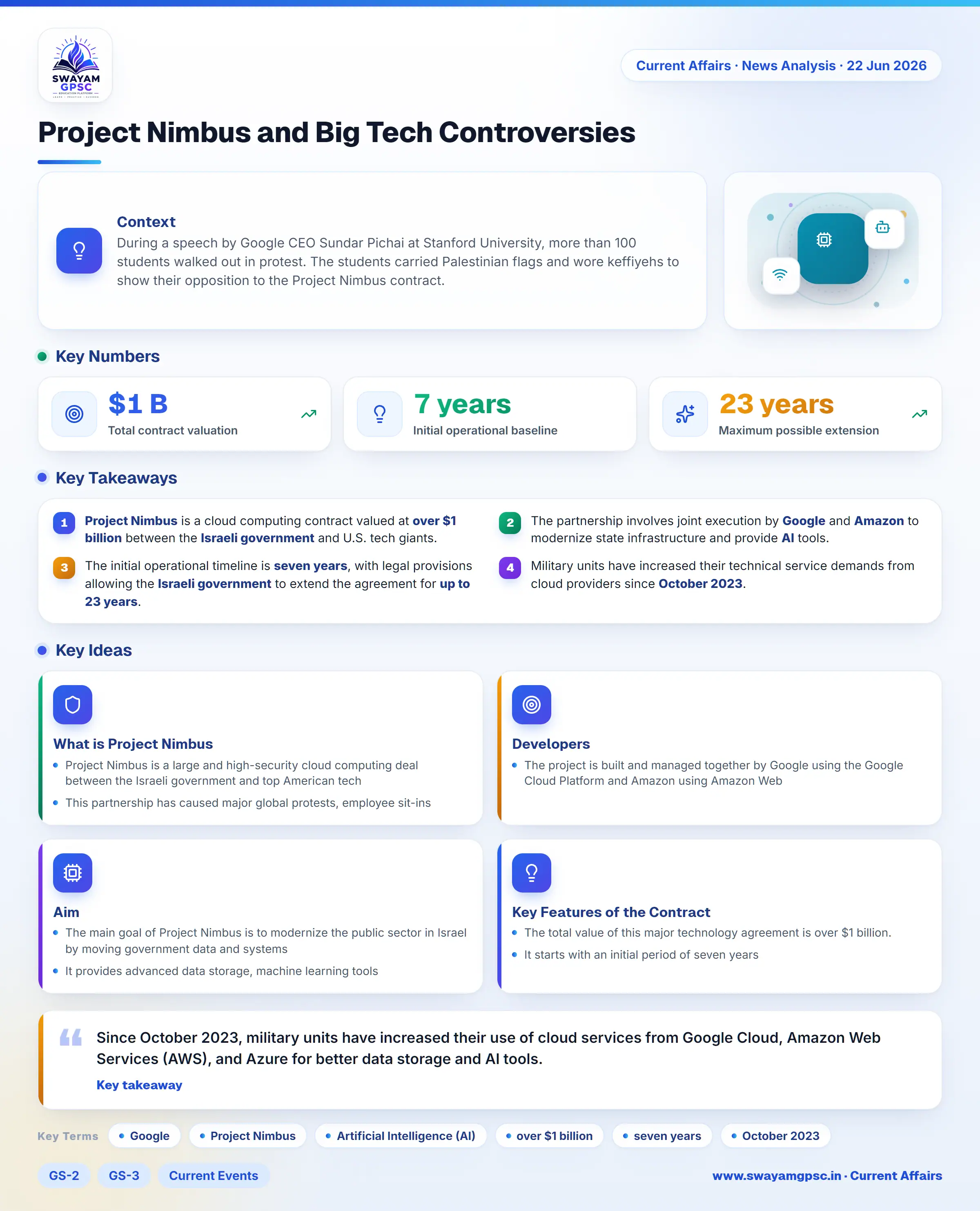
- Project Nimbus is a cloud computing contract valued at over $1 billion between the Israeli government and U.S. tech giants.
- The partnership involves joint execution by Google and Amazon to modernize state infrastructure and provide AI tools.
- The initial operational timeline is seven years, with legal provisions allowing the Israeli government to extend the agreement for up to 23 years.
- Military units have increased their technical service demands from cloud providers since October 2023.
- Leaked documents revealed a strict non-restriction clause preventing tech firms from shutting down services even during rule violations.
Context
- During a speech by Google CEO Sundar Pichai at Stanford University, more than 100 students walked out in protest.
- The students carried Palestinian flags and wore keffiyehs to show their opposition to the Project Nimbus contract.
What is Project Nimbus
- Project Nimbus is a large and high-security cloud computing deal between the Israeli government and top American tech companies.
- This partnership has caused major global protests, employee sit-ins, and student boycotts because people worry about tech companies supporting state surveillance and military actions.
Developers
- The project is built and managed together by Google using the Google Cloud Platform and Amazon using Amazon Web Services (AWS).
Aim
- The main goal of Project Nimbus is to modernize the public sector in Israel by moving government data and systems to commercial cloud platforms.
- It provides advanced data storage, machine learning tools, and Artificial Intelligence (AI) services to all levels of government work.
Key Features of the Contract
- The total value of this major technology agreement is over $1 billion.
- It starts with an initial period of seven years, and legal rules let the Israeli government extend it for up to 23 years.
- Leaked documents show that Israel added a strict non-restriction rule stopping Google and Amazon from cutting off cloud services even if rules are broken.
- Since October 2023, military units have increased their use of cloud services from Google Cloud, Amazon Web Services (AWS), and Azure for better data storage and AI tools.
- The setup creates local cloud data centers inside Israel so that server management stays independent from foreign corporate control.
Controversies
- Reports indicate that these cloud platforms might store surveillance data, which creates worries that commercial technology could support military actions.
- Project Nimbus has led to employee protests and workplace activism, showing deep ethical concerns over defense contracts signed by tech giants.