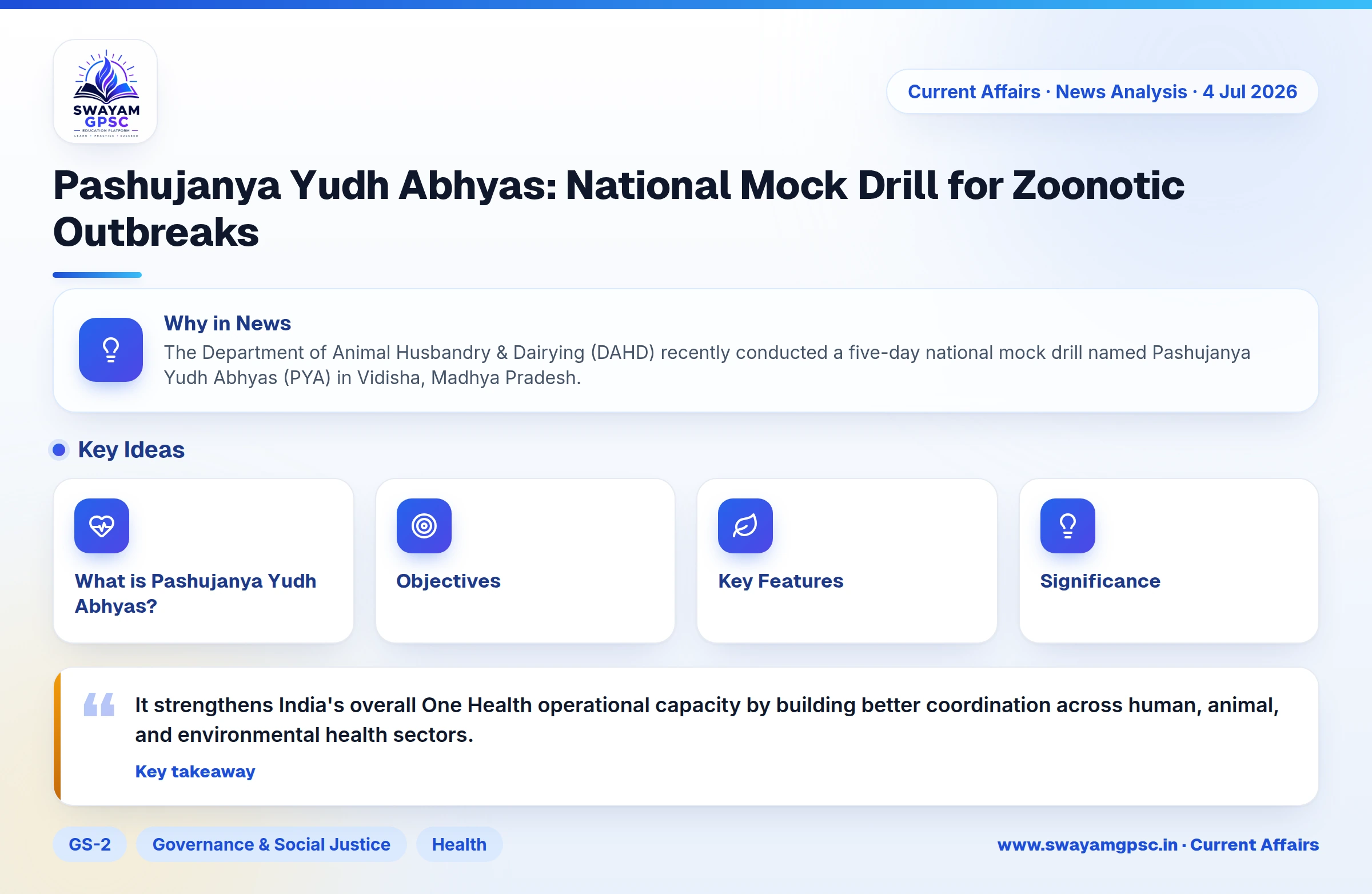
Pashujanya Yudh Abhyas: National Mock Drill for Zoonotic Outbreaks
#GS-2 #Governance & Social Justice #Health #GS-3 #Science & Technology #Disaster Management #Disaster Preparedness #Environment #Current Events #National #Animal Husbandry #One Health Mission
Why in News
- The Department of Animal Husbandry & Dairying (DAHD) recently conducted a five-day national mock drill named Pashujanya Yudh Abhyas (PYA) in Vidisha, Madhya Pradesh.
What is Pashujanya Yudh Abhyas?
- It is a national-level emergency response exercise organized under the National One Health Mission to evaluate India's readiness and response mechanisms for animal health emergencies and zoonotic disease outbreaks.
Objectives
- The exercise aims to strengthen national readiness for early detection, containment, and management of diseases that spread from animals to humans.
- It seeks to enhance inter-sectoral coordination among veterinary teams, public health agencies, wildlife departments, laboratories, and local administrative authorities.
Key Features
- The drill simulated an Influenza A (H1N1) outbreak with potential spread to humans and wildlife to test the complete emergency response chain.
- Key agencies collaborated under the National Joint Outbreak Response Team (NJORT), including ICAR, ICMR, NCDC, NIHSAD, AIIMS Bhopal, and the MoEFCC.
- The exercise covered the full emergency cycle from initial disease surveillance and lab testing to epidemiological investigation, biosecurity measures, containment, and public communication.
- It concluded with a structured review session to identify operational gaps, update emergency response rules, and improve future preparedness for health crises.
Significance
- It strengthens India's overall One Health operational capacity by building better coordination across human, animal, and environmental health sectors.
- Regular mock drills improve the resilience of public health systems through faster disease detection and evidence-based emergency actions.