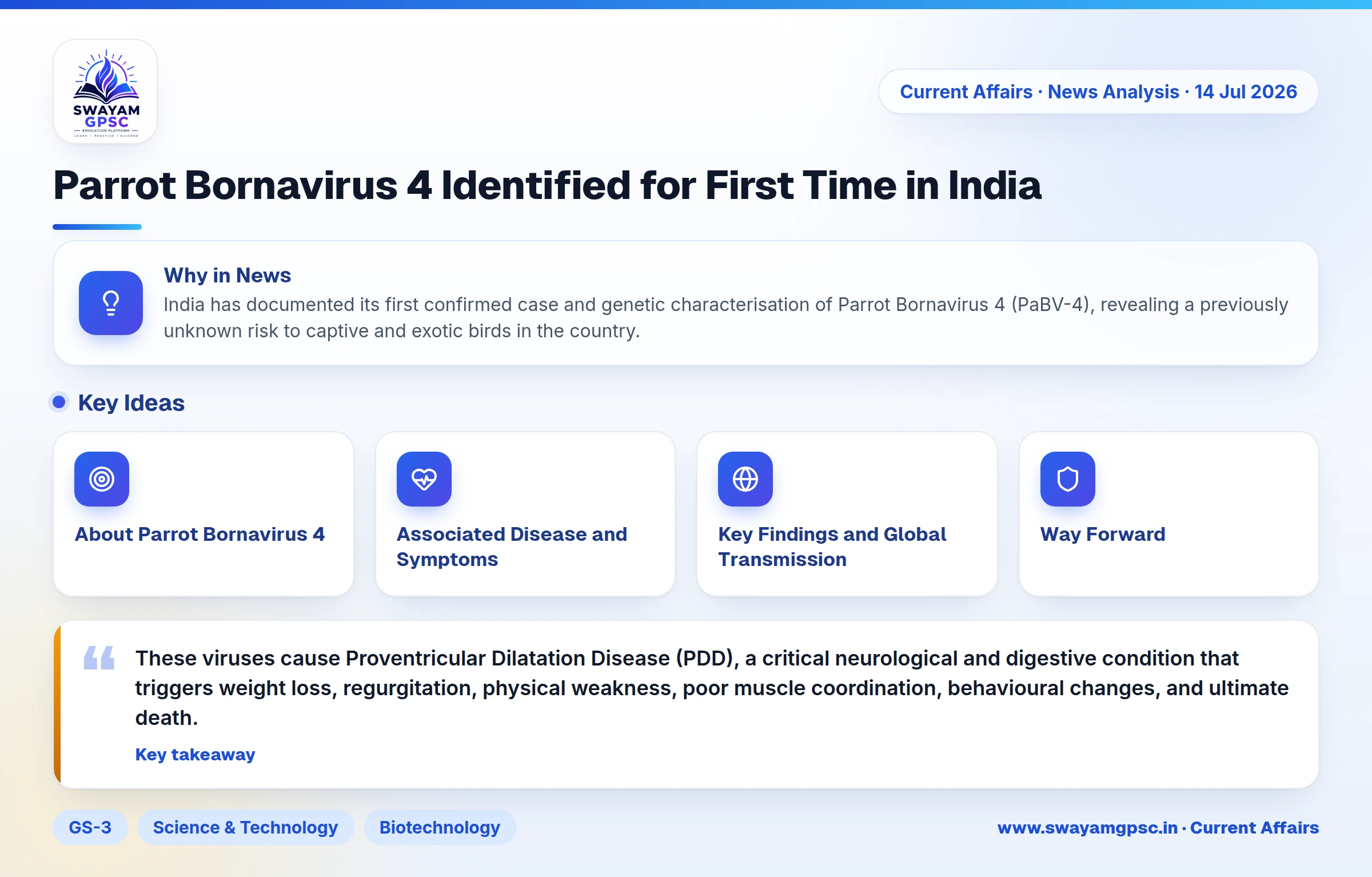
Parrot Bornavirus 4 Identified for First Time in India
#GS-3 #Science & Technology #Biotechnology #Environment #Biodiversity #Wildlife #Current Events #National #Parrot Bornavirus 4 #Proventricular Dilatation Disease
Why in News
- India has documented its first confirmed case and genetic characterisation of Parrot Bornavirus 4 (PaBV-4), revealing a previously unknown risk to captive and exotic birds in the country.
About Parrot Bornavirus 4
- Parrot bornaviruses belong to the genus Orthobornavirus under the Bornaviridae family, primarily infecting psittacine birds like parrots, parakeets, macaws, cockatoos, cockatiels, budgerigars, and lovebirds.
- Researchers divide eight PaBV genotypes into two clades: Alphapsittaciforme (comprising PaBV-1 to PaBV-4, PaBV-7, and PaBV-8) and Betapsittaciforme (comprising PaBV-5 and PaBV-6).
Associated Disease and Symptoms
- These viruses cause Proventricular Dilatation Disease (PDD), a critical neurological and digestive condition that triggers weight loss, regurgitation, physical weakness, poor muscle coordination, behavioural changes, and ultimate death.
Key Findings and Global Transmission
- Testing showed PaBV-4 present in 44 out of 83 evaluated birds, which included 88% of birds that died from PDD and 19% of birds that appeared healthy.
- Identifying the virus in symptomless birds indicates asymptomatic transmission, while genetic sequencing matches strains from the United States, Canada, Israel, Japan, and South Korea, pointing toward international bird trade as the likely vector.
Way Forward
- This finding creates major concerns for exotic pet markets and breeding programs, emphasizing the need for strict quarantine, systematic screening, specialized veterinary care, clean bird housing, strong biosecurity protocols, and enhanced avian disease surveillance.