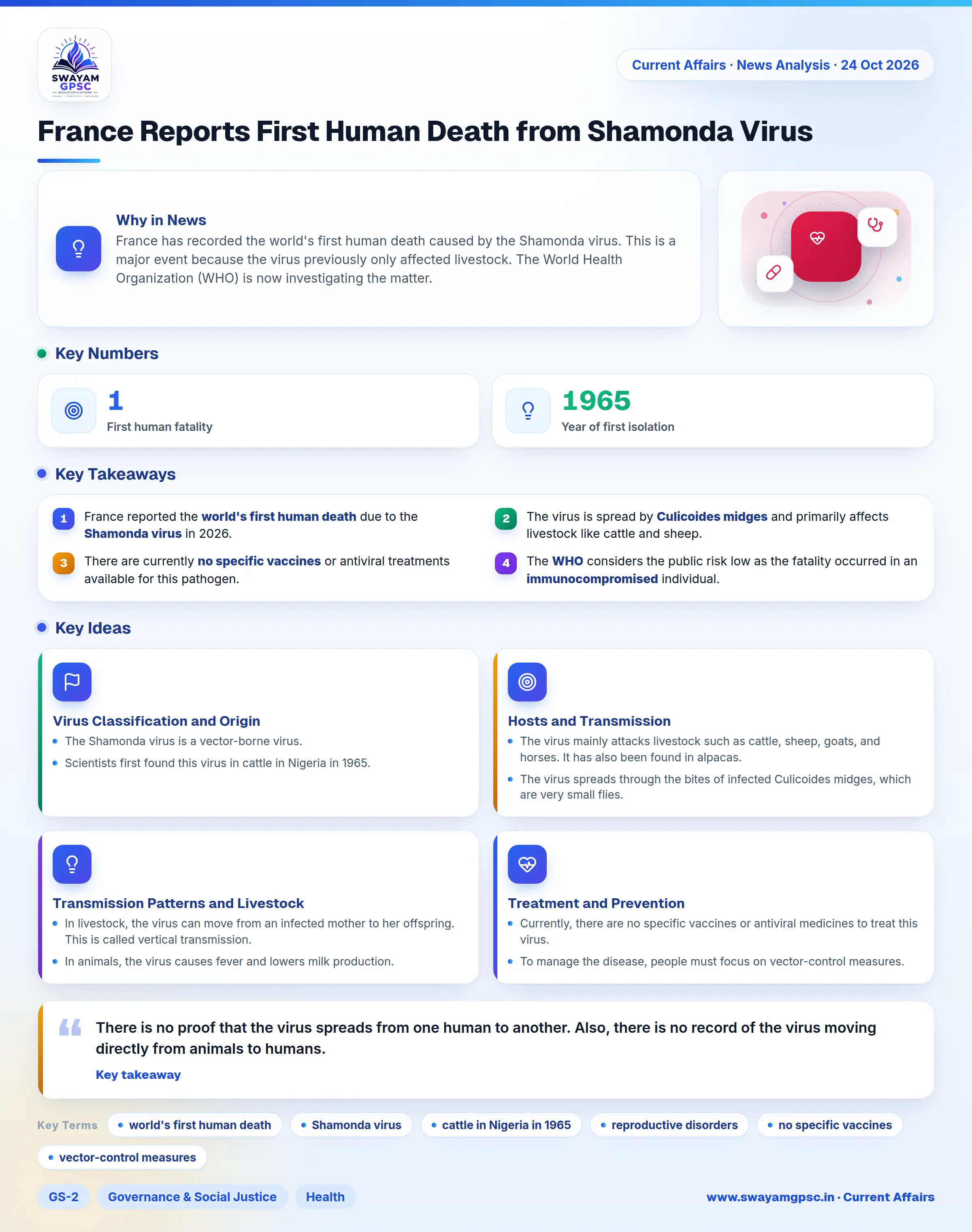
France Reports First Human Death from Shamonda Virus
#GS-2 #Governance & Social Justice #Health #GS-3 #Science & Technology #Current Events #International
Key takeaways
- France reported the world's first human death due to the Shamonda virus in 2026.
- The virus is spread by Culicoides midges and primarily affects livestock like cattle and sheep.
- There are currently no specific vaccines or antiviral treatments available for this pathogen.
- The WHO considers the public risk low as the fatality occurred in an immunocompromised individual.
Why in News
- France has recorded the world's first human death caused by the Shamonda virus. This is a major event because the virus previously only affected livestock. The World Health Organization (WHO) is now investigating the matter.
Virus Classification and Origin
- The Shamonda virus is a vector-borne virus. It belongs to the genus Orthobunyavirus within the Peribunyaviridae family and is part of the Simbu serogroup.
- Scientists first found this virus in cattle in Nigeria in 1965. For a long time, it stayed in parts of Africa and Asia. However, it appeared in Europe, including Germany and France, in 2026.
Hosts and Transmission
- The virus mainly attacks livestock such as cattle, sheep, goats, and horses. It has also been found in alpacas.
- The virus spreads through the bites of infected Culicoides midges, which are very small flies.
Transmission Patterns and Livestock Impact
- There is no proof that the virus spreads from one human to another. Also, there is no record of the virus moving directly from animals to humans.
- In livestock, the virus can move from an infected mother to her offspring. This is called vertical transmission.
- In animals, the virus causes fever and lowers milk production. It also leads to serious reproductive disorders, such as stillbirths, spontaneous abortions, and congenital deformities in newborn animals.
Treatment and Prevention
- Currently, there are no specific vaccines or antiviral medicines to treat this virus.
- To manage the disease, people must focus on vector-control measures. This includes using insect repellents and destroying the places where midges breed.
Public Health Risk
- The WHO believes the risk to the general public is still low.
- Experts think this specific human death was a rare event. It happened because the patient had a very weak immune system, or was immunocompromised.