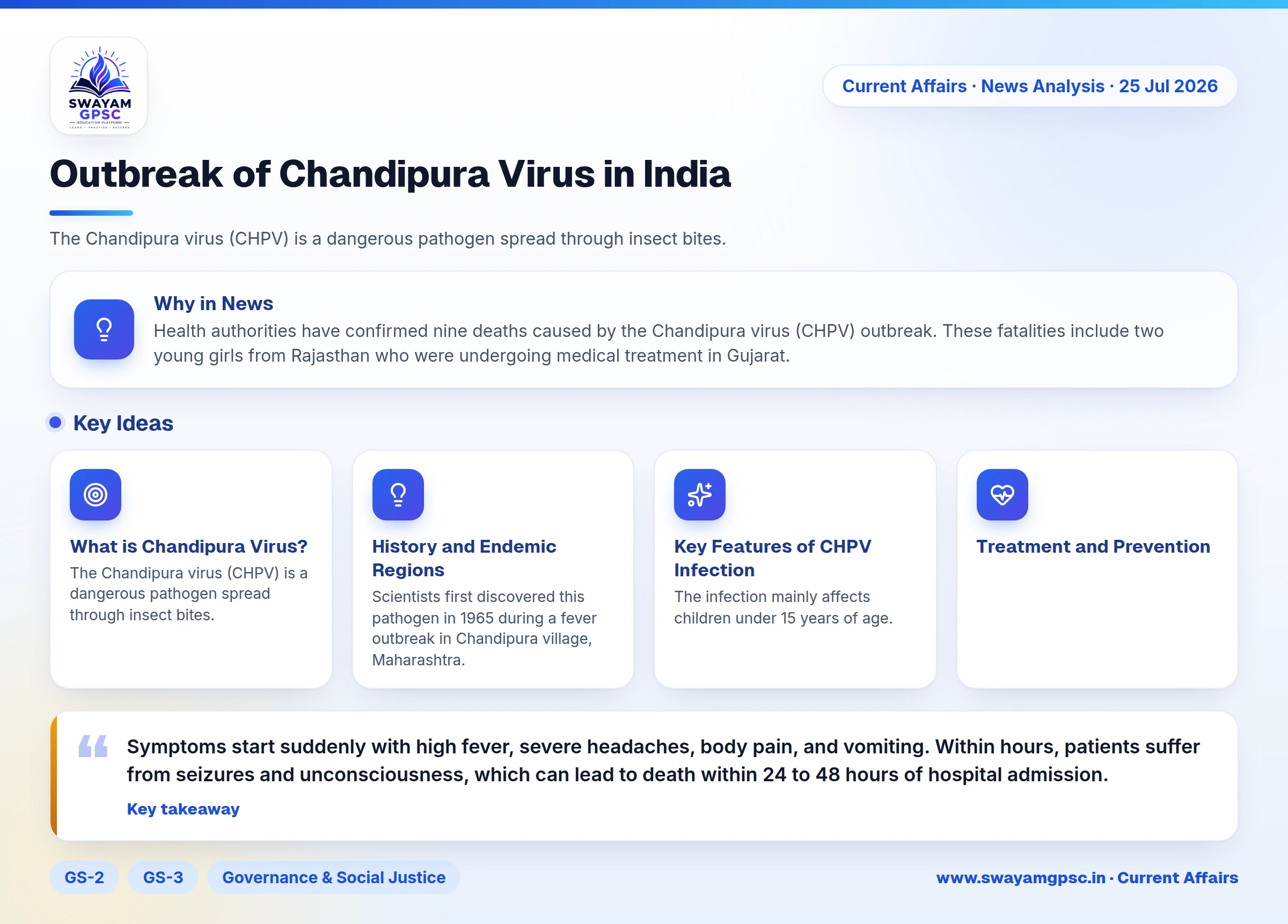
Outbreak of Chandipura Virus in India
#GS-2 #GS-3 #Governance & Social Justice #Health #Science & Technology #Current Events #National #Gujarat #Chandipura Virus #Acute Encephalitis Syndrome
Why in News
- Health authorities have confirmed nine deaths caused by the Chandipura virus (CHPV) outbreak. These fatalities include two young girls from Rajasthan who were undergoing medical treatment in Gujarat.
What is Chandipura Virus?
- The Chandipura virus (CHPV) is a dangerous pathogen spread through insect bites. It belongs to the Rhabdoviridae family, which is the same family that includes the rabies-causing Lyssavirus.
- When it enters the human body, it triggers Acute Encephalitis Syndrome (AES). This condition causes rapid and life-threatening swelling of brain tissue.
History and Endemic Regions
- Scientists first discovered this pathogen in 1965 during a fever outbreak in Chandipura village, Maharashtra. They isolated it from human blood samples during that time.
- Between 2003 and 2004, the virus caused severe outbreaks among children across Maharashtra, Northern Gujarat, and Andhra Pradesh. The mortality rate in these outbreaks reached between 55% and 78%.
- The virus remains widespread in central and western parts of India. It commonly affects rural and tribal areas in Gujarat, Maharashtra, Rajasthan, and Andhra Pradesh where sandflies breed easily.
Key Features of CHPV Infection
- Infected female Phlebotomine sandflies (Phlebotomus papatasi) and certain mosquitoes like Aedes aegypti spread this virus. The pathogen stays in the saliva glands of these insects before entering human bodies.
- The infection mainly affects children under 15 years of age. Their developing nervous systems cannot fight off the viral brain inflammation easily.
- Symptoms start suddenly with high fever, severe headaches, body pain, and vomiting. Within hours, patients suffer from seizures and unconsciousness, which can lead to death within 24 to 48 hours of hospital admission.
- Infections rise significantly during the monsoon season. Rain creates ideal conditions for sandflies to breed inside mud walls, animal sheds, and unpaved houses.
- This virus is not contagious between humans. It does not spread through coughing, breathing, or touching an infected person.
Treatment and Prevention
- Currently, no specific antiviral medicine or preventive vaccine exists to treat or protect against the Chandipura virus.
- Doctors manage cases by offering emergency supportive treatment in intensive care units (ICUs) to control fever and brain swelling.