Once-Weekly Basal Insulin Awiqli Launched in India
#GS-2 #Governance & Social Justice #Health #GS-3 #Science & Technology #Biotechnology #Current Events #National
Key takeaways
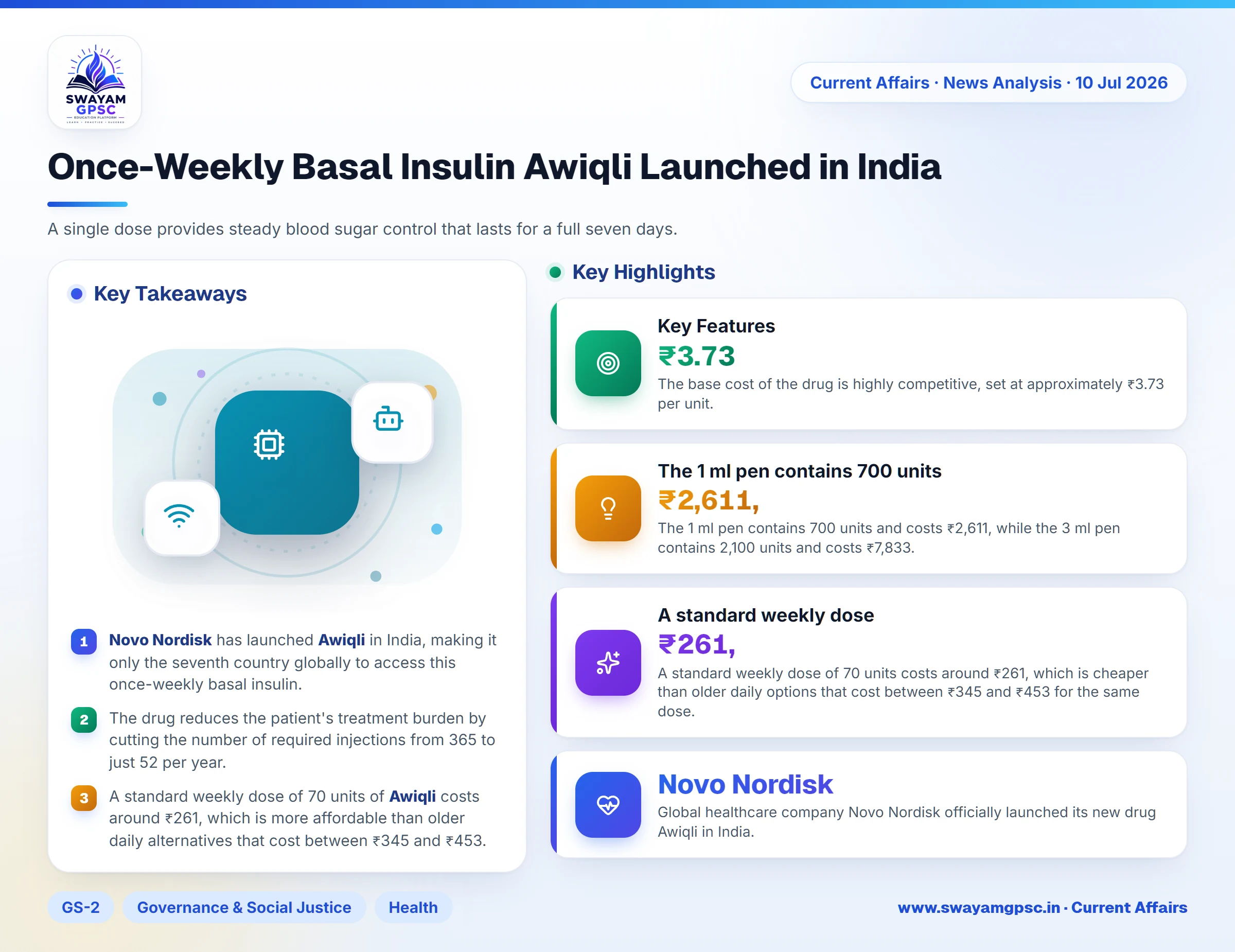
- Novo Nordisk has launched Awiqli in India, making it only the seventh country globally to access this once-weekly basal insulin.
- The drug reduces the patient's treatment burden by cutting the number of required injections from 365 to just 52 per year.
- A standard weekly dose of 70 units of Awiqli costs around ₹261, which is more affordable than older daily alternatives that cost between ₹345 and ₹453.
- The drug, generically called insulin icodec, has shown superior clinical efficacy in managing HbA1c levels during ONWARDS-1 trials.
Why in News
- Global healthcare company Novo Nordisk officially launched its new drug Awiqli in India.
- India is only the seventh country in the world to introduce this advanced diabetes treatment.
What is Awiqli
- Known generically as insulin icodec, this drug is a long-acting background basal insulin analogue.
- It is the first once-weekly basal insulin in the world approved for adults with both Type 1 and Type 2 diabetes.
- A single dose provides steady blood sugar control that lasts for a full seven days.
- The Denmark-based pharmaceutical company Novo Nordisk researched and developed this breakthrough medicine.
- The main goal of this drug is to reduce the pain of frequent injections and encourage patients to start insulin therapy earlier.
Key Features
- This weekly dose reduces the patient's injection burden from 365 daily shots to just 52 shots a year.
- In clinical trials called ONWARDS-1, the drug managed blood sugar better than standard daily insulin glargine U100.
- It lowered HbA1c levels effectively and kept blood sugar within the target range without causing sudden, dangerous drops.
- Patients can easily self-administer the medicine at home using a pre-filled, highly accurate FlexTouch pen device.
- The base cost of the drug is highly competitive, set at approximately ₹3.73 per unit.
- The 1 ml pen contains 700 units and costs ₹2,611, while the 3 ml pen contains 2,100 units and costs ₹7,833.
- A standard weekly dose of 70 units costs around ₹261, which is cheaper than older daily options that cost between ₹345 and ₹453 for the same dose.
Significance
- By removing the fear of daily pinpricks, patients can start treatment earlier to avoid severe, long-term health complications.
- This launch will increase competition in the market and push Indian drugmakers to develop their own long-acting insulin therapies.