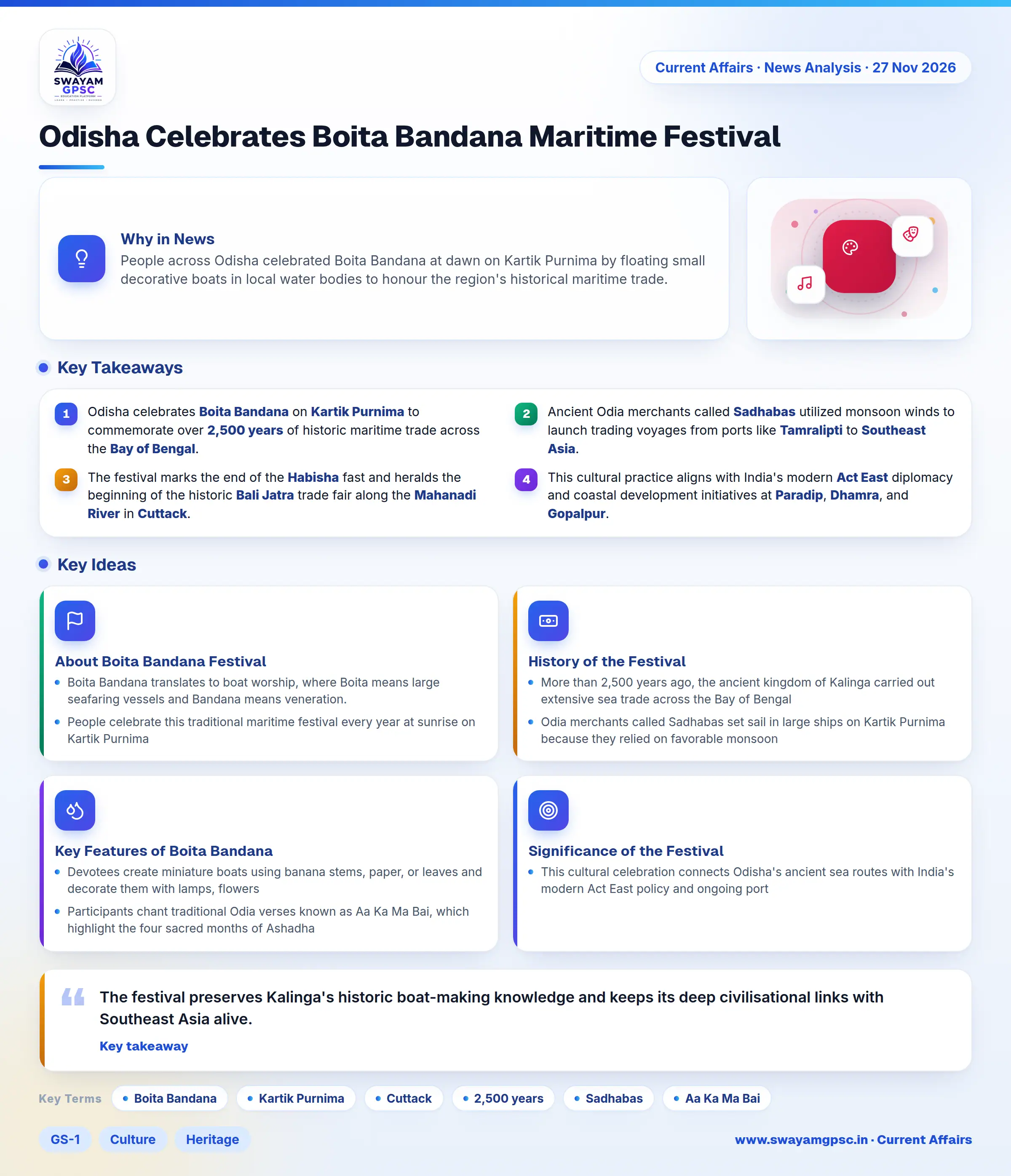
Odisha Celebrates Boita Bandana Maritime Festival
#GS-1 #Culture #Heritage #Fairs & Festivals #GS-2 #Current Events #National #Boita Bandana
Key takeaways
- Odisha celebrates Boita Bandana on Kartik Purnima to commemorate over 2,500 years of historic maritime trade across the Bay of Bengal.
- Ancient Odia merchants called Sadhabas utilized monsoon winds to launch trading voyages from ports like Tamralipti to Southeast Asia.
- The festival marks the end of the Habisha fast and heralds the beginning of the historic Bali Jatra trade fair along the Mahanadi River in Cuttack.
- This cultural practice aligns with India's modern Act East diplomacy and coastal development initiatives at Paradip, Dhamra, and Gopalpur.
Why in News
- People across Odisha celebrated Boita Bandana at dawn on Kartik Purnima by floating small decorative boats in local water bodies to honour the region's historical maritime trade.
About Boita Bandana Festival
- Boita Bandana translates to boat worship, where Boita means large seafaring vessels and Bandana means veneration.
- People celebrate this traditional maritime festival every year at sunrise on Kartik Purnima, which marks the full moon day in the Odia calendar month of Kartik.
- People participate in this event mainly in Odisha's coastal areas such as Cuttack, Puri, and Paradip, while similar cultural events take place in Thailand as Loy Krathong and in Bali as Masakapan ke Tukad.
History of the Festival
- More than 2,500 years ago, the ancient kingdom of Kalinga carried out extensive sea trade across the Bay of Bengal using major ports like Tamralipti, Palur, Chelitalo, and Manikpatna.
- Odia merchants called Sadhabas set sail in large ships on Kartik Purnima because they relied on favorable monsoon winds to travel to Bali, Java, Sumatra, Borneo, Myanmar, Siam, and Sri Lanka.
Key Features of Boita Bandana
- Devotees create miniature boats using banana stems, paper, or leaves and decorate them with lamps, flowers, betel leaves, and areca nuts before releasing them into water bodies at sunrise.
- Participants chant traditional Odia verses known as Aa Ka Ma Bai, which highlight the four sacred months of Ashadha, Kartika, Magha, and Baisakha linked to seasonal trading voyages.
- This event marks the end of the month-long Habisha fasting period and signals the start of the famous Bali Jatra fair along the Mahanadi River in Cuttack.
- The festival recreates historical farewell rituals where women performed aarti and prayed for the safe journey and financial success of departing merchants.
Significance of the Festival
- The festival preserves Kalinga's historic boat-making knowledge and keeps its deep civilisational links with Southeast Asia alive.
- This cultural celebration connects Odisha's ancient sea routes with India's modern Act East policy and ongoing port development projects at Paradip, Dhamra, and Gopalpur.