National SARAS Mela 2026: Empowering Rural Women
#GS-2 #Governance & Social Justice #Current Events #GS-3 #Economy #Infrastructure #Inclusive Growth
Key takeaways
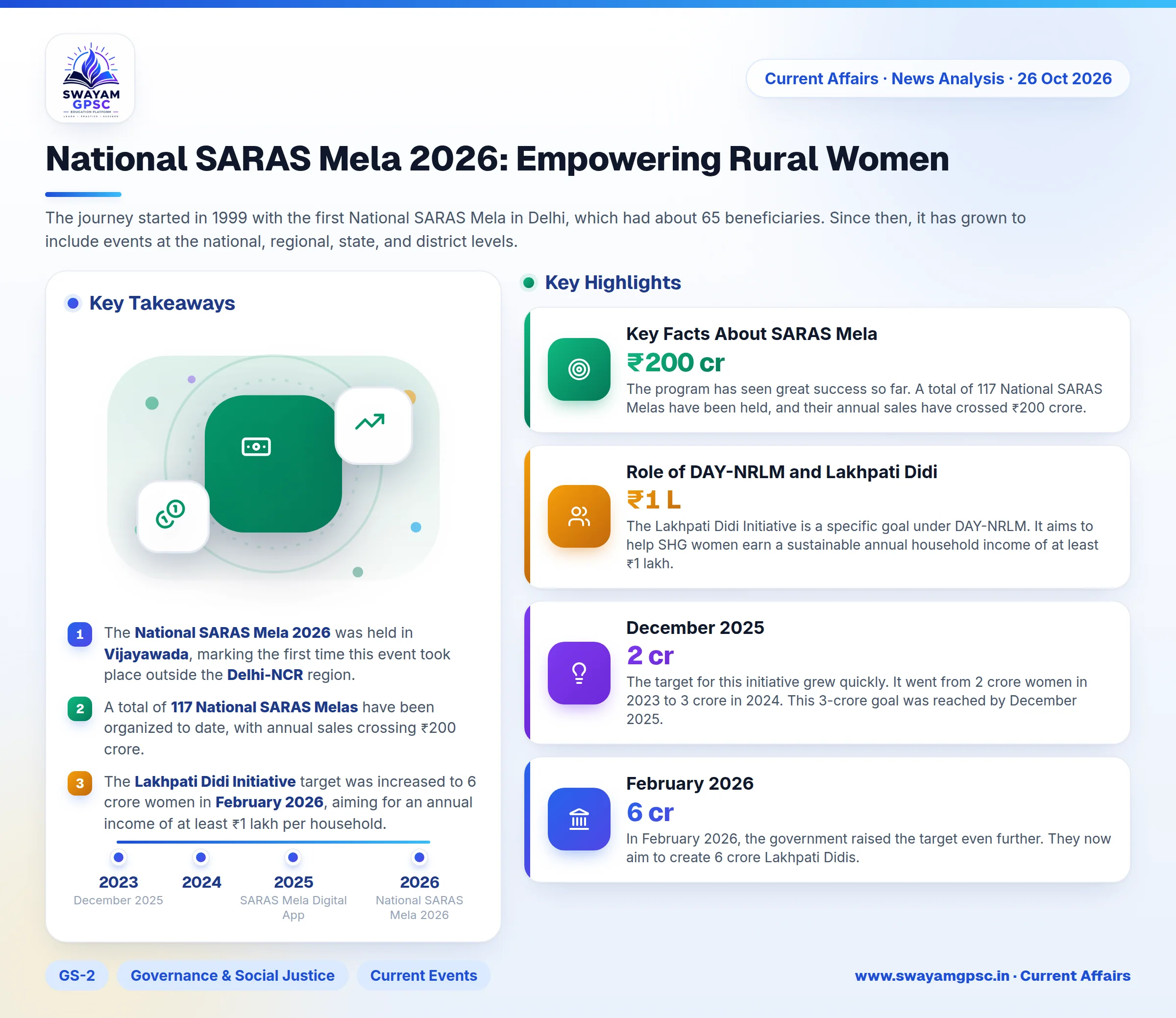
- The National SARAS Mela 2026 was held in Vijayawada, marking the first time this event took place outside the Delhi-NCR region.
- A total of 117 National SARAS Melas have been organized to date, with annual sales crossing ₹200 crore.
- The Lakhpati Didi Initiative target was increased to 6 crore women in February 2026, aiming for an annual income of at least ₹1 lakh per household.
- Digital integration is being pushed through the eSARAS Platform and the SARAS Mela Digital App (2025) to expand market reach for SHGs.
Why in News
- The National SARAS Mela 2026 took place in Vijayawada, Andhra Pradesh. This is a historic event because it is the first time a National SARAS Mela was held outside the Delhi-NCR region.
- Women entrepreneurs from 34 States and Union Territories participated in this event. The goal is to promote Self-Help Group (SHG) businesses, help them find markets, and create sustainable rural livelihoods under the DAY-NRLM.
Key Facts About SARAS Mela
- The SARAS Mela is a platform backed by the government. It operates under the Deendayal Antyodaya Yojana-National Rural Livelihoods Mission (DAY-NRLM) to link rural women from SHGs with buyers and larger markets.
- The journey started in 1999 with the first National SARAS Mela in Delhi, which had about 65 beneficiaries. Since then, it has grown to include events at the national, regional, state, and district levels.
- The program has seen great success so far. A total of 117 National SARAS Melas have been held, and their annual sales have crossed ₹200 crore.
- To keep the momentum, States and UTs are expected to host at least two State-level SARAS Melas every year. This leads to roughly 50 events across the country annually.
- The fairs showcase a variety of products. These include handlooms, handicrafts, traditional textiles, natural products, processed foods, and regional cuisines. Visitors can also enjoy an India Food Court and cultural displays.
- The government works with several partners to make this happen. Key collaborators include NABARD and the National Institute of Rural Development and Panchayati Raj (NIRDPR), along with other private and public stakeholders.
- The eSARAS Platform is an e-commerce tool. It allows customers to find and buy SHG products online even after the physical fairs end.
- In 2025, the SARAS Mela Digital App was launched. This app helps manage SHG nominations, track attendance, and share event details.
- The fairs encourage the use of UPI-based transactions. However, they still keep other payment options available so that everyone can participate regardless of their tech access.
Role of DAY-NRLM and Lakhpati Didi
- DAY-NRLM is a major government program to reduce rural poverty. It empowers women by giving them access to credit, new skills, technology, and stable ways to earn a living through SHGs.
- SARAS Melas help DAY-NRLM by improving how products are branded. They create direct links between buyers and sellers and open doors to national markets.
- The Lakhpati Didi Initiative is a specific goal under DAY-NRLM. It aims to help SHG women earn a sustainable annual household income of at least ₹1 lakh.
- To ensure this income is steady, the government tracks it over at least four agricultural seasons or business cycles.
- The target for this initiative grew quickly. It went from 2 crore women in 2023 to 3 crore in 2024. This 3-crore goal was reached by December 2025.
- In February 2026, the government raised the target even further. They now aim to create 6 crore Lakhpati Didis.
- SARAS Melas help women move from just surviving to running actual micro-businesses. This helps them diversify their income and grow their businesses in a sustainable way.
Conclusion
- The SARAS Mela 2026 shows a clear shift. The focus has moved from simply promoting livelihoods to creating market-driven rural businesses and empowering women economically.
- By combining SHG enterprises, government support, digital tools, and the Lakhpati Didi goal, the program supports inclusive growth and the vision of Atmanirbhar Bharat.