India's Rice Fields as Global Methane Hotspots
#GS-3 #Environment #Climate Change #Sustainable Development #Economy #Agriculture #Food Security #Current Events #National
Why in News
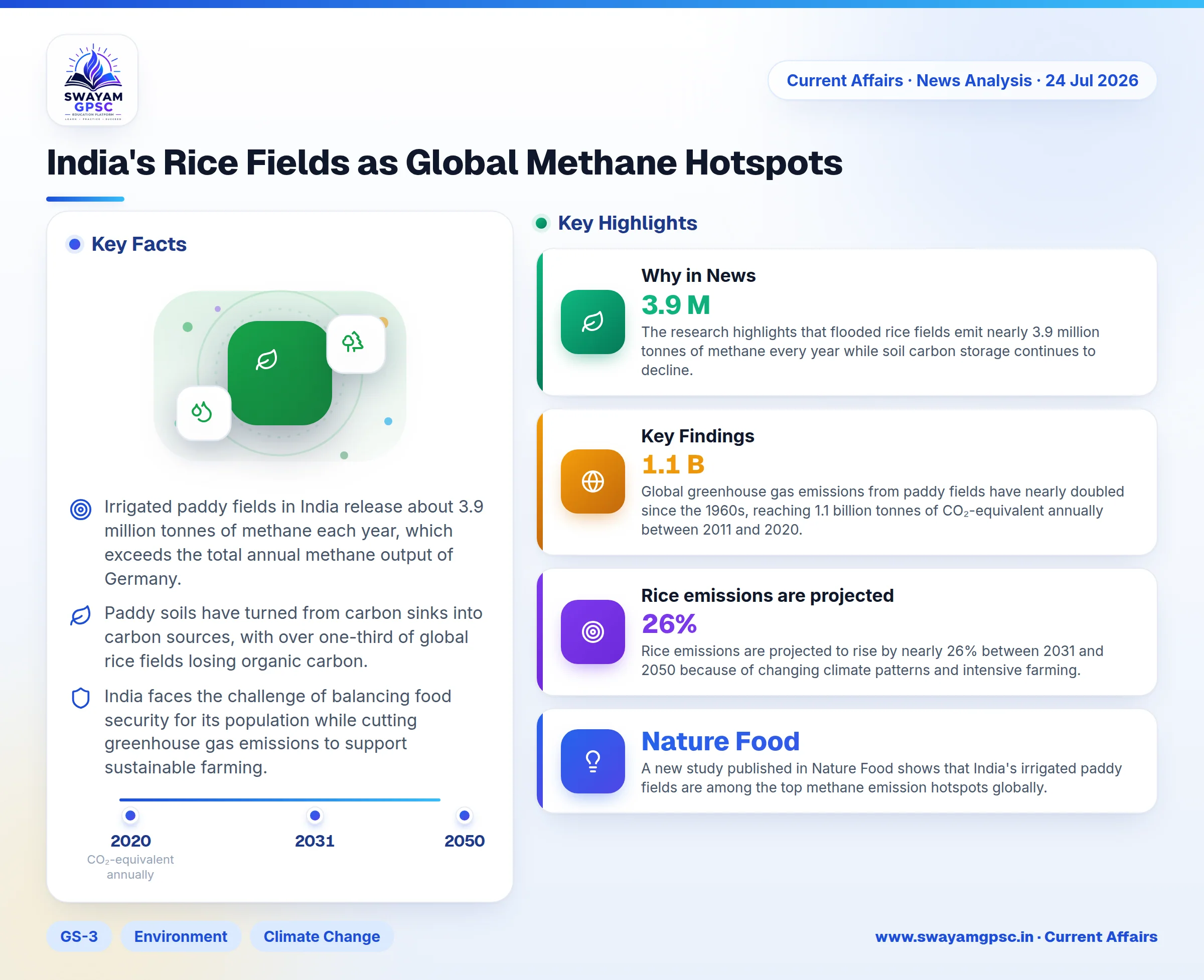
- A new study published in Nature Food shows that India's irrigated paddy fields are among the top methane emission hotspots globally.
- The research highlights that flooded rice fields emit nearly 3.9 million tonnes of methane every year while soil carbon storage continues to decline.
Key Findings
- Global greenhouse gas emissions from paddy fields have nearly doubled since the 1960s, reaching 1.1 billion tonnes of CO₂-equivalent annually between 2011 and 2020.
- Irrigated paddy fields in India release about 3.9 million tonnes of methane each year, which exceeds the total annual methane output of Germany.
- Paddy soils have turned from carbon sinks into carbon sources, with over one-third of global rice fields losing organic carbon.
- Rice emissions are projected to rise by nearly 26% between 2031 and 2050 because of changing climate patterns and intensive farming.
Implications and Way Forward
- Farmers need to adopt eco-friendly techniques such as Alternate Wetting and Drying (AWD), Direct Seeded Rice (DSR), System of Rice Intensification (SRI), and crop diversification.
- India faces the challenge of balancing food security for its population while cutting greenhouse gas emissions to support sustainable farming.