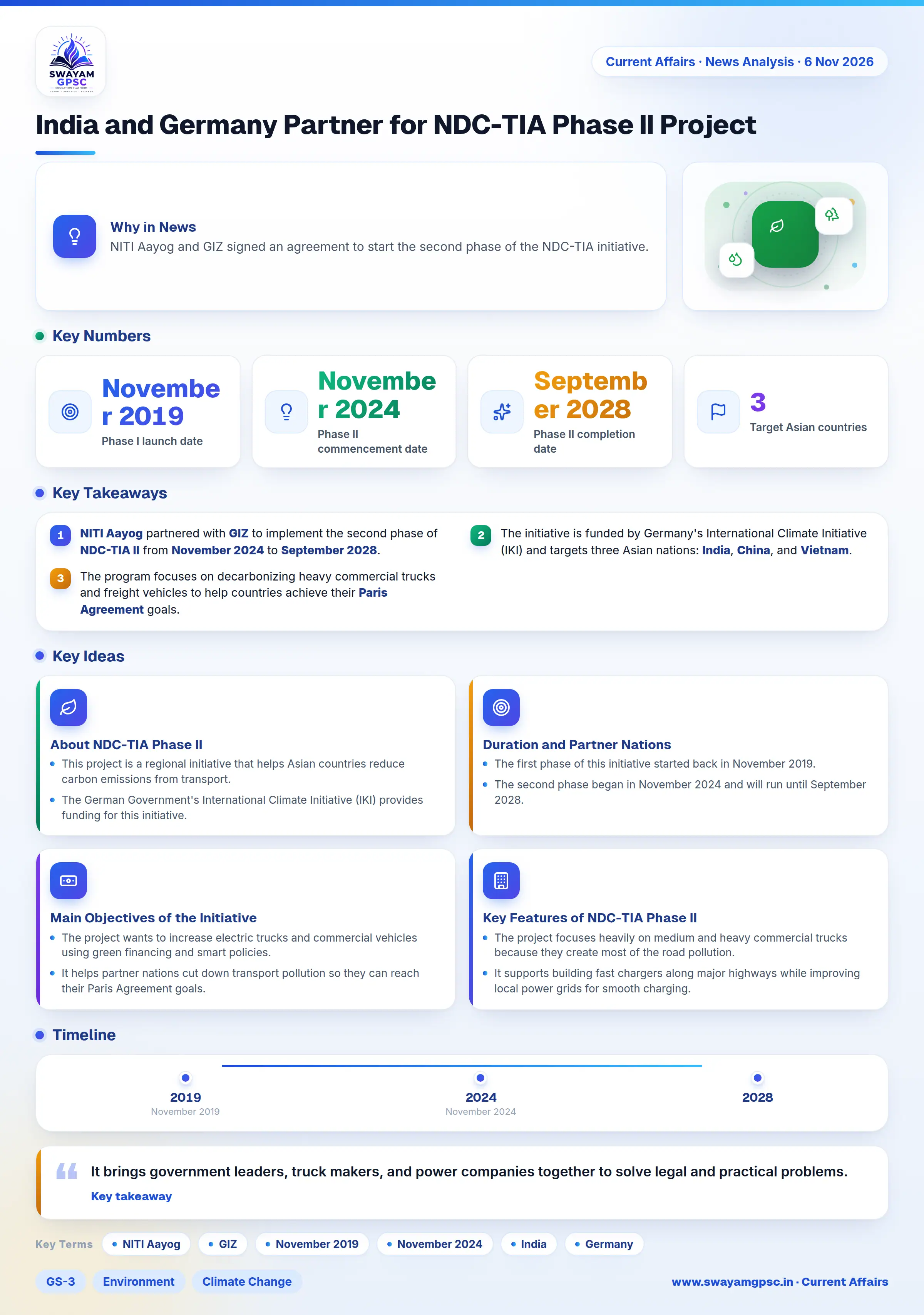
India and Germany Partner for NDC-TIA Phase II Project
#GS-3 #Environment #Climate Change #GS-2 #Current Events #International #Economy #Infrastructure
Key takeaways
- NITI Aayog partnered with GIZ to implement the second phase of NDC-TIA II from November 2024 to September 2028.
- The initiative is funded by Germany's International Climate Initiative (IKI) and targets three Asian nations: India, China, and Vietnam.
- The program focuses on decarbonizing heavy commercial trucks and freight vehicles to help countries achieve their Paris Agreement goals.
Why in News
- NITI Aayog and GIZ signed an agreement to start the second phase of the NDC-TIA initiative.
About NDC-TIA Phase II
- This project is a regional initiative that helps Asian countries reduce carbon emissions from transport.
- The German Government's International Climate Initiative (IKI) provides funding for this initiative.
- A team of global think tanks led by GIZ implements this program across the region.
- The project aims to create clear rules and speed up the use of electric vehicles in Asian transport.
Duration and Partner Nations
- The first phase of this initiative started back in November 2019.
- The second phase began in November 2024 and will run until September 2028.
- This program focuses on three target countries: India, China, and Vietnam.
- Germany acts as the main global partner and funding source for all three nations.
Main Objectives of the Initiative
- The project wants to increase electric trucks and commercial vehicles using green financing and smart policies.
- It helps partner nations cut down transport pollution so they can reach their Paris Agreement goals.
Key Features of NDC-TIA Phase II
- The project focuses heavily on medium and heavy commercial trucks because they create most of the road pollution.
- It supports building fast chargers along major highways while improving local power grids for smooth charging.
- It introduces new financing models like risk sharing and total cost analysis to lower investment risks.
- It brings government leaders, truck makers, and power companies together to solve legal and practical problems.
- It helps India, China, and Vietnam share technical data and clean transport ideas with each other.