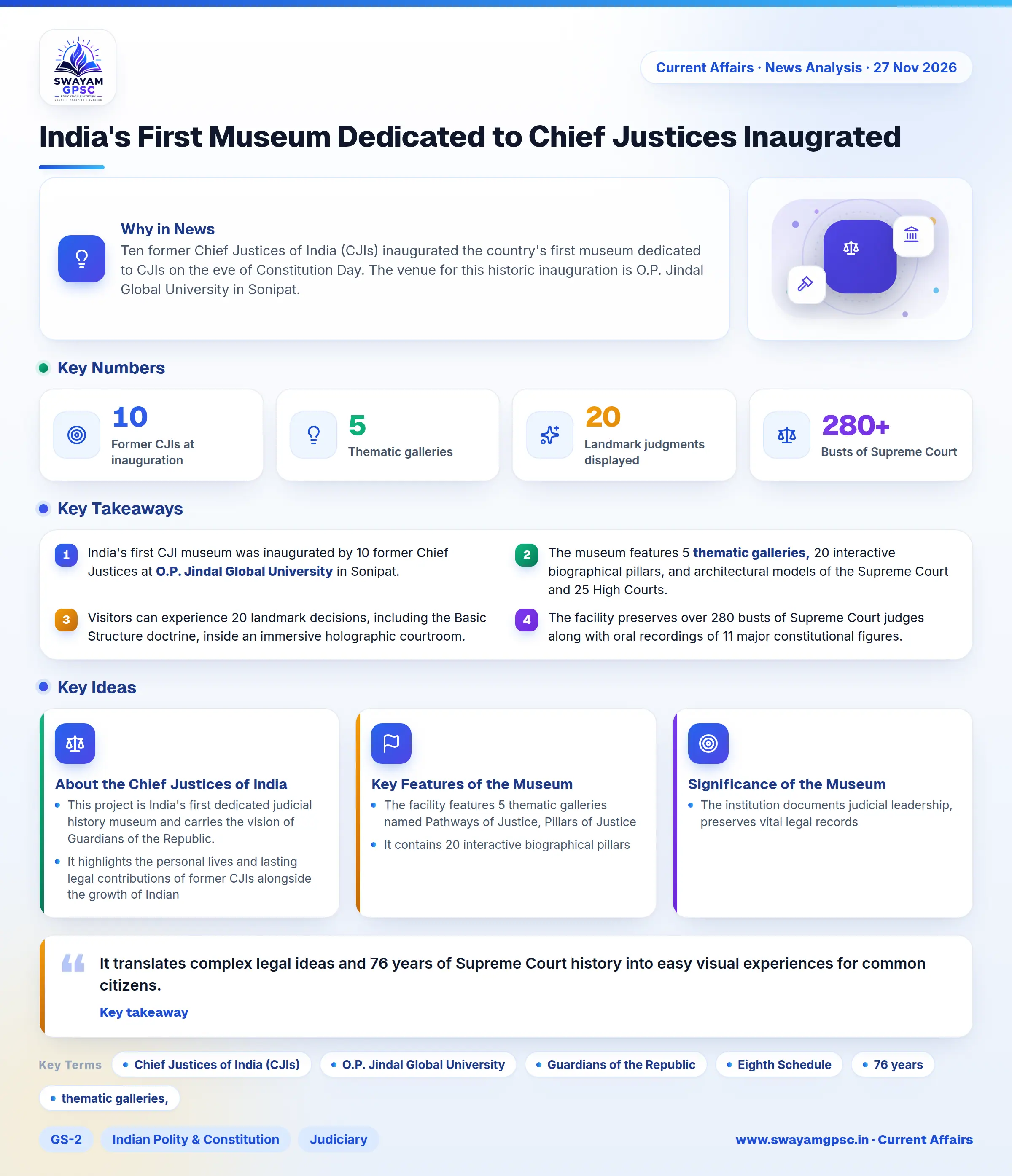
India's First Museum Dedicated to Chief Justices Inaugrated
#GS-2 #Indian Polity & Constitution #Judiciary #Current Events #National #Judicial History #Constitution Day
Key takeaways
- India's first CJI museum was inaugurated by 10 former Chief Justices at O.P. Jindal Global University in Sonipat.
- The museum features 5 thematic galleries, 20 interactive biographical pillars, and architectural models of the Supreme Court and 25 High Courts.
- Visitors can experience 20 landmark decisions, including the Basic Structure doctrine, inside an immersive holographic courtroom.
- The facility preserves over 280 busts of Supreme Court judges along with oral recordings of 11 major constitutional figures.
- The project aims to make 76 years of Supreme Court history and constitutional governance easily accessible to the general public.
Why in News
- Ten former Chief Justices of India (CJIs) inaugurated the country's first museum dedicated to CJIs on the eve of Constitution Day.
- The venue for this historic inauguration is O.P. Jindal Global University in Sonipat.
About the Chief Justices of India Museum
- This project is India's first dedicated judicial history museum and carries the vision of Guardians of the Republic.
- It highlights the personal lives and lasting legal contributions of former CJIs alongside the growth of Indian constitutional jurisprudence.
- The museum is situated inside O.P. Jindal Global University (JGU) in Sonipat, Haryana, where it complements the campus's existing Constitution Museum.
- Its central aim is to safeguard legal heritage, expand public understanding of constitutional rights, and motivate future lawyers and legal scholars.
Key Features of the Museum
- The facility features 5 thematic galleries named Pathways of Justice, Pillars of Justice, Hall of Constitutional Voices, Keystones of Justice, and Ideas of Justice.
- It contains 20 interactive biographical pillars, 22 regional handloom tapestries representing languages listed under the Eighth Schedule, and detailed models of the Supreme Court and 25 High Courts.
- Visitors can explore 20 landmark constitutional rulings, such as the Basic Structure doctrine and the growth of Public Interest Litigation, using a holographic courtroom.
- The display houses more than 280 busts of Supreme Court judges along with symbolic sculptures and recorded oral histories from 11 prominent legal figures.
Significance of the Museum
- It translates complex legal ideas and 76 years of Supreme Court history into easy visual experiences for common citizens.
- The institution documents judicial leadership, preserves vital legal records, and emphasizes the importance of an independent judiciary in democratic governance.