ICMR SAMPADA Survey 2023-2025: Key Findings on Anaemia in India
#GS-2 #Governance & Social Justice #Health #Current Events #National #GS-3 #Science & Technology #Biotechnology #ICMR #SAMPADA Survey #Anaemia Mukt Bharat
Key takeaways
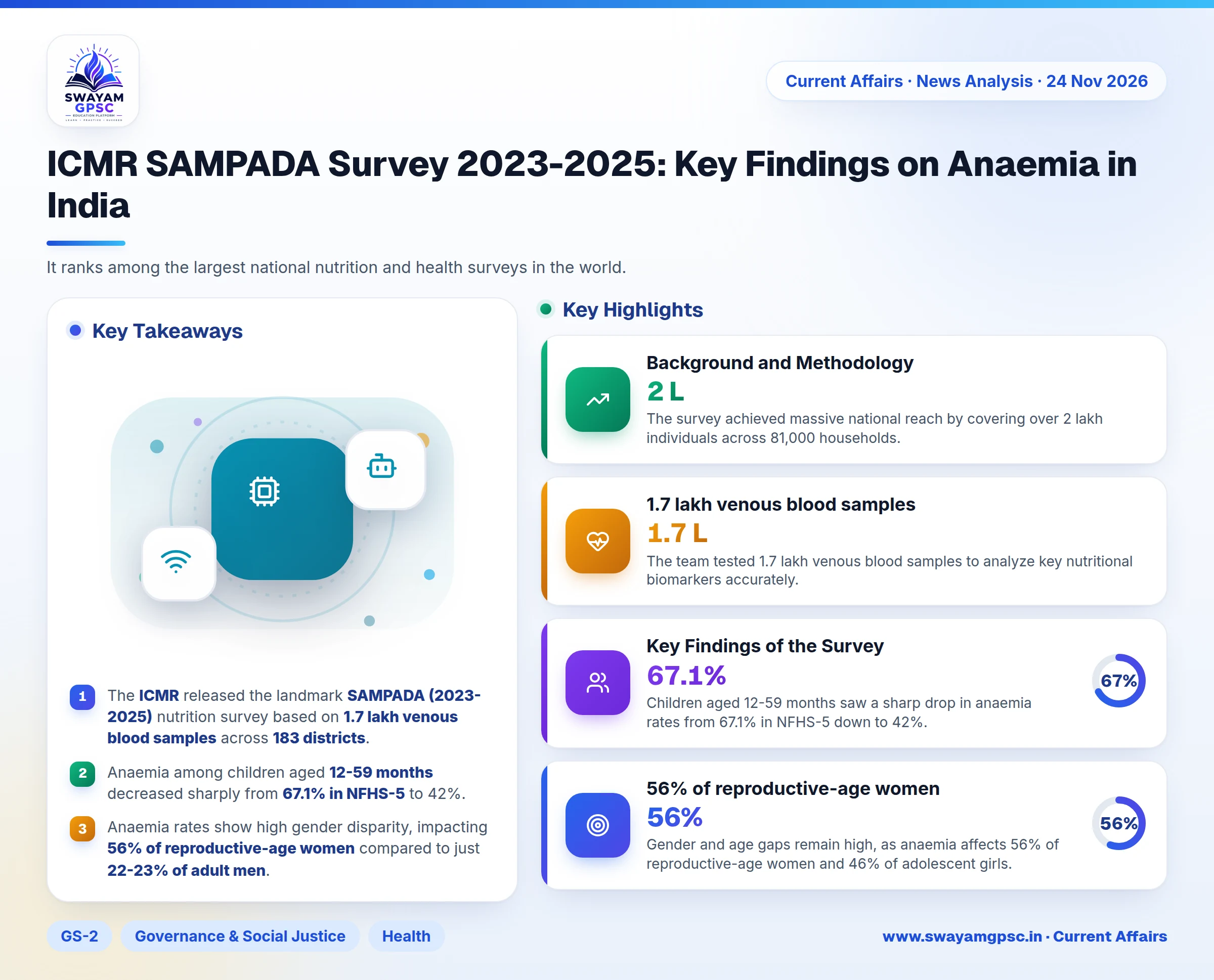
- The ICMR released the landmark SAMPADA (2023-2025) nutrition survey based on 1.7 lakh venous blood samples across 183 districts.
- Anaemia among children aged 12-59 months decreased sharply from 67.1% in NFHS-5 to 42%.
- Anaemia rates show high gender disparity, impacting 56% of reproductive-age women compared to just 22-23% of adult men.
- Iron deficiency causes roughly 50% of all anaemia cases in women and children, while severe anaemia stays below 2% nationwide.
- The survey creates the first national baseline for elderly anaemia to improve targeted care under Anaemia Mukt Bharat 2.0.
Why in News
- The Indian Council of Medical Research (ICMR) released major findings from the SAMPADA (2023-2025) nutrition survey.
- The findings show a positive drop in overall anaemia levels across India when compared to older national surveys.
About the SAMPADA Survey
- The SAMPADA survey stands for the Survey for Assessment of Markers of Population Health, Activity, Diet and Anthropometry.
- It ranks among the largest national nutrition and health surveys in the world.
- The study tracks anaemia, micronutrient levels, inflammation indicators, dietary habits, exercise routines, and body measurements across all age groups.
- The Indian Council of Medical Research (ICMR) and the ICMR-National Institute of Nutrition (NIN) conducted this survey under the Ministry of Health and Family Welfare.
Background and Methodology
- The ICMR conducted this survey between 2023 and 2025 to fix testing flaws in older surveys like NFHS-5.
- The NFHS-5 used capillary blood samples from finger pricks, which frequently overestimated actual anaemia rates.
- The survey achieved massive national reach by covering over 2 lakh individuals across 81,000 households.
- Researchers collected data from 183 districts across 35 States and UTs.
- The team tested 1.7 lakh venous blood samples to analyze key nutritional biomarkers accurately.
Key Findings of the Survey
- Anaemia levels dropped significantly compared to previous national surveys.
- Children aged 12-59 months saw a sharp drop in anaemia rates from 67.1% in NFHS-5 down to 42%.
- Gender and age gaps remain high, as anaemia affects 56% of reproductive-age women and 46% of adolescent girls.
- In contrast, anaemia affects only 22% to 23% of adolescent boys and adult men.
- Mild anaemia forms the largest share of cases, affecting almost half of anaemic women, young girls, and children.
- About three-fourths of affected boys and men suffer only from mild anaemia, creating a clear opportunity for simple early treatments.
- Severe anaemia remains very low across India, affecting less than 2% of people in most age brackets.
- Lack of iron causes nearly 50% of all anaemia cases among women, teenage girls, and young children.
- Health programs must also address other drivers like infections, haemoglobin disorders, and long-term bodily inflammation.
- Deficiencies in vitamin B12 and folate show similar levels in both anaemic and non-anaemic people, showing they play a minor role in India's total anaemia burden.
- Iron deficiency centers mostly around under-five children, adolescent girls, and women of reproductive age.
- Adolescent boys, adult men, and elderly citizens show much lower rates of iron deficiency.
- This survey offers the first national baseline data on anaemia among older adults in India.
- The findings will help design targeted health actions across different age groups and upgrade testing under Anaemia Mukt Bharat 2.0.