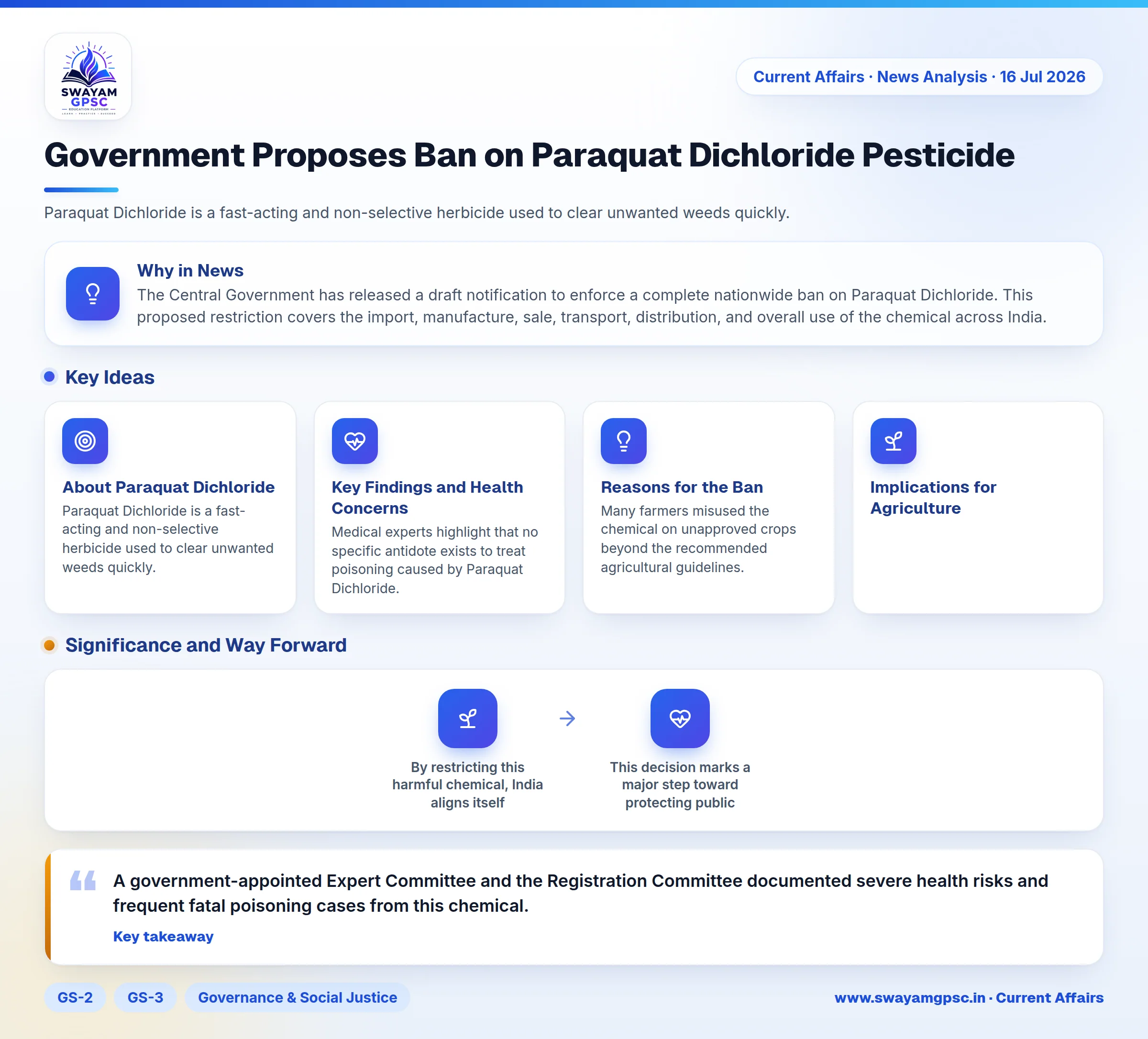
Government Proposes Ban on Paraquat Dichloride Pesticide
#GS-2 #GS-3 #Governance & Social Justice #Health #Economy #Agriculture #Environment #Pollution #National
Why in News
- The Central Government has released a draft notification to enforce a complete nationwide ban on Paraquat Dichloride.
- This proposed restriction covers the import, manufacture, sale, transport, distribution, and overall use of the chemical across India.
- Authorities introduced this ban under Section 27 of the Insecticides Act, 1968, because the chemical poses severe safety risks to humans and animals.
About Paraquat Dichloride
- Paraquat Dichloride is a fast-acting and non-selective herbicide used to clear unwanted weeds quickly.
- Farmers widely use it for crop desiccation before harvest in crops like tea, cotton, coffee, rubber, paddy, wheat, maize, potato, grapes, and apple.
Key Findings and Health Concerns
- A government-appointed Expert Committee and the Registration Committee documented severe health risks and frequent fatal poisoning cases from this chemical.
- Medical experts highlight that no specific antidote exists to treat poisoning caused by Paraquat Dichloride.
- More than 70 countries have already banned or strictly limited the use of this dangerous weedicide.
- It ranks among the most toxic herbicides globally, causing damage through swallowing, breathing in fumes, or direct contact with skin.
- Exposure can cause severe lung damage, kidney failure, liver damage, heart problems, Parkinson's disease, and death in many cases.
Reasons for the Ban
- Officials raised alarms over direct chemical exposure among farm laborers, intentional self-harm, and accidental home poisonings.
- Many farmers misused the chemical on unapproved crops beyond the recommended agricultural guidelines.
- Several states, including Telangana, Andhra Pradesh, Odisha, and Kerala, had requested the Centre for strict controls on its sale.
Implications for Agriculture
- The ban may temporarily raise weed management expenses as farmers transition toward safer weed control methods.
- On the positive side, removing this chemical will protect farm workers and stop toxic residues from entering food products.
Significance and Way Forward
- By restricting this harmful chemical, India aligns itself with global standards on agricultural safety and chemical regulation.
- This decision marks a major step toward protecting public health and promoting sustainable farming practices across the nation.