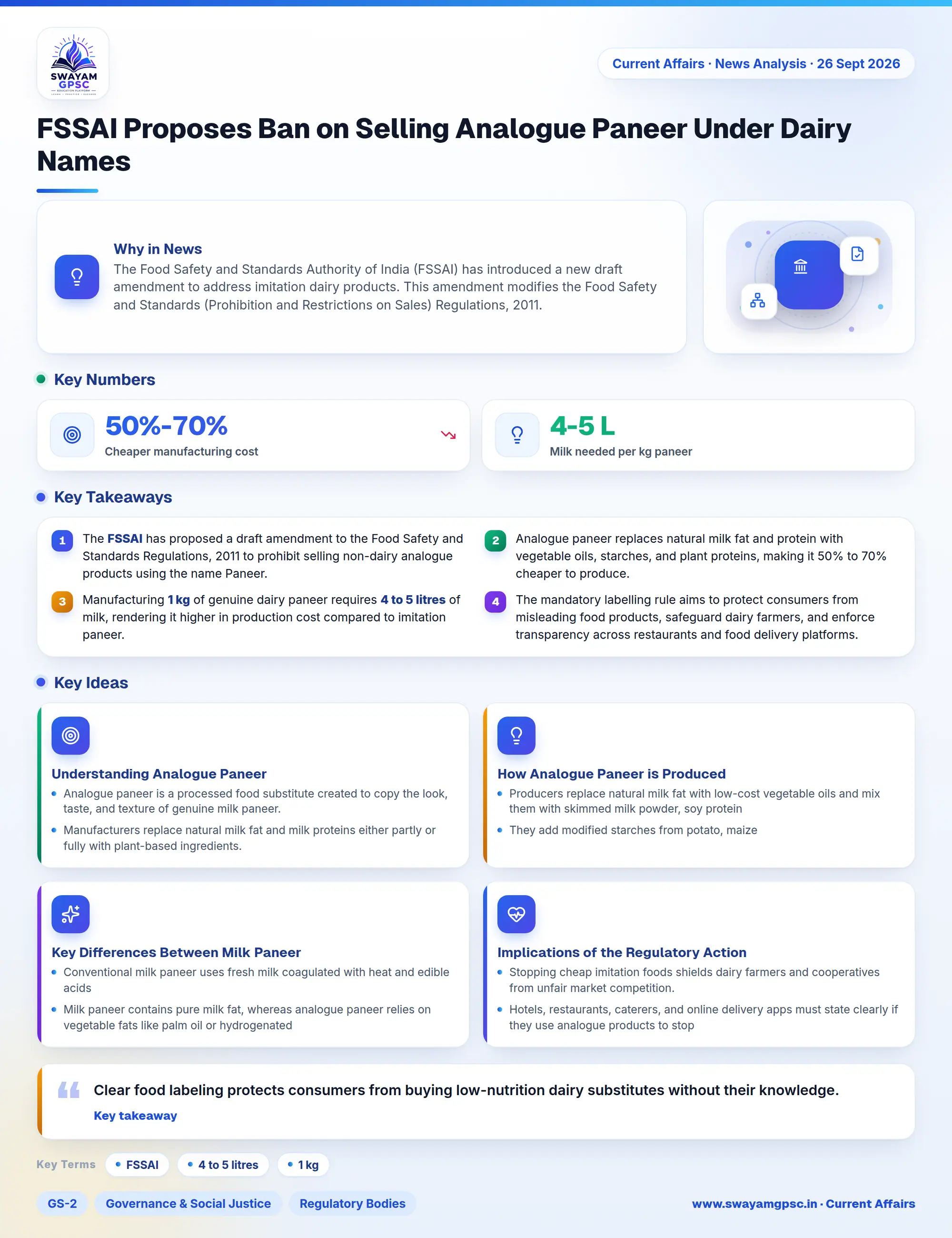
FSSAI Proposes Ban on Selling Analogue Paneer Under Dairy Names
#GS-2 #Governance & Social Justice #Regulatory Bodies #Food Safety #GS-3 #Economy #Agriculture #Dairy Sector #FSSAI
Key takeaways
- The FSSAI has proposed a draft amendment to the Food Safety and Standards Regulations, 2011 to prohibit selling non-dairy analogue products using the name Paneer.
- Analogue paneer replaces natural milk fat and protein with vegetable oils, starches, and plant proteins, making it 50% to 70% cheaper to produce.
- Manufacturing 1 kg of genuine dairy paneer requires 4 to 5 litres of milk, rendering it higher in production cost compared to imitation paneer.
- The mandatory labelling rule aims to protect consumers from misleading food products, safeguard dairy farmers, and enforce transparency across restaurants and food delivery platforms.
Why in News
- The Food Safety and Standards Authority of India (FSSAI) has introduced a new draft amendment to address imitation dairy products.
- This amendment modifies the Food Safety and Standards (Prohibition and Restrictions on Sales) Regulations, 2011.
- The proposed rule bans companies from manufacturing, marketing, or selling non-dairy analogue products using the name Paneer.
Understanding Analogue Paneer
- Analogue paneer is a processed food substitute created to copy the look, taste, and texture of genuine milk paneer.
- Manufacturers replace natural milk fat and milk proteins either partly or fully with plant-based ingredients.
- These non-dairy components include vegetable oils, hydrogenated fats, food starches, and plant-derived proteins.
How Analogue Paneer is Produced
- Producers replace natural milk fat with low-cost vegetable oils and mix them with skimmed milk powder, soy protein, or caseinates.
- They add modified starches from potato, maize, or tapioca along with emulsifiers and stabilizers under heat to give the product a firm texture.
- Acidic agents are added to curdle the mixture, which is then mechanically pressed into blocks that cut and fry just like real paneer.
Key Differences Between Milk Paneer and Analogue Paneer
- Conventional milk paneer uses fresh milk coagulated with heat and edible acids, while analogue paneer uses vegetable oils, starch, and plant proteins.
- Milk paneer contains pure milk fat, whereas analogue paneer relies on vegetable fats like palm oil or hydrogenated fats.
- Milk paneer delivers complete milk proteins with all essential amino acids, but analogue paneer offers variable protein quality.
- Producing real paneer takes 4 to 5 litres of milk per kilogram, making analogue paneer 50% to 70% cheaper to manufacture.
- Under FSSAI guidelines, milk paneer is a standardized dairy item, whereas analogue paneer is a dairy substitute and cannot use the term paneer.
Implications of the Regulatory Action
- Clear food labeling protects consumers from buying low-nutrition dairy substitutes without their knowledge.
- Stopping cheap imitation foods shields dairy farmers and cooperatives from unfair market competition.
- Hotels, restaurants, caterers, and online delivery apps must state clearly if they use analogue products to stop deceptive practices.