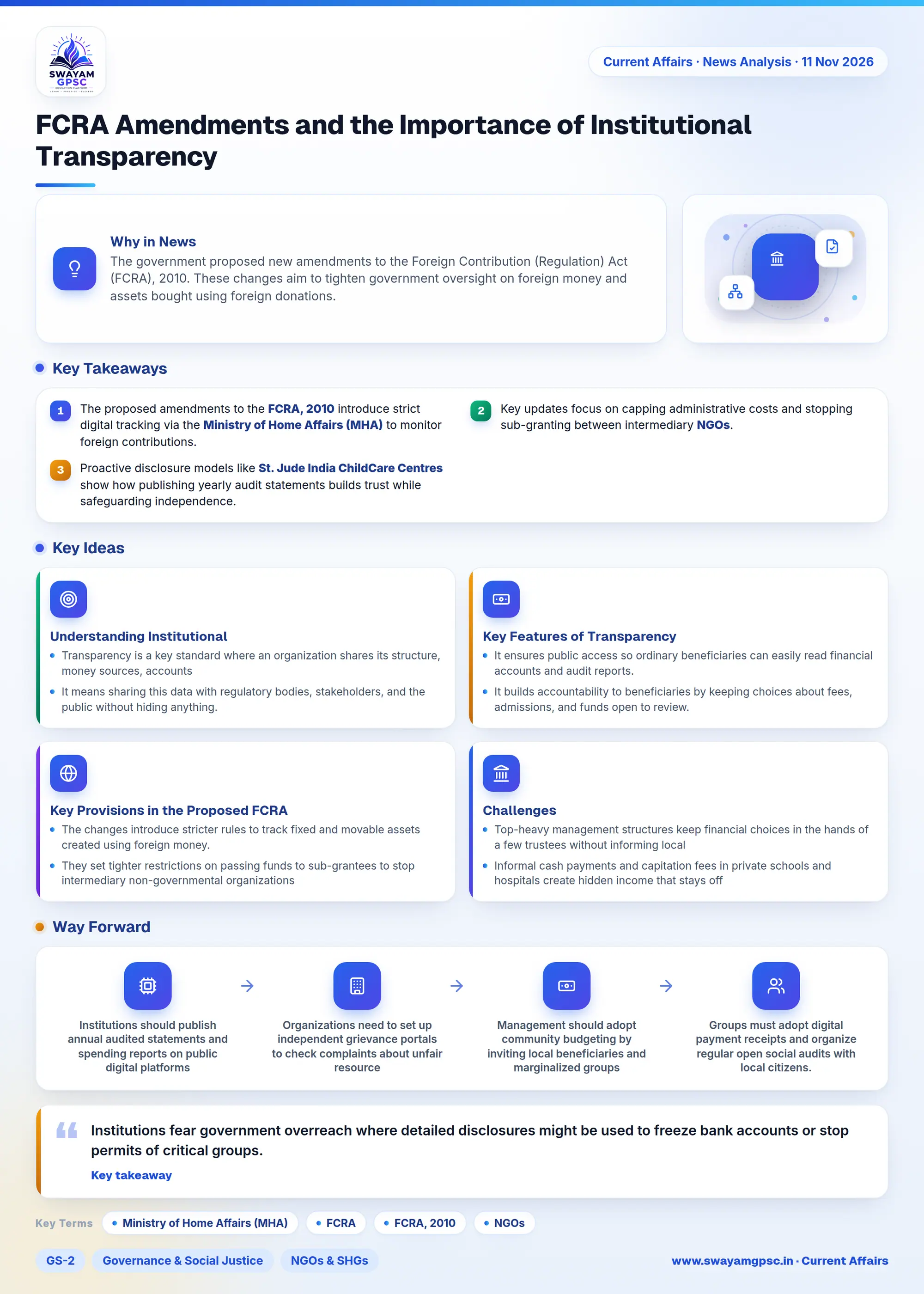
FCRA Amendments and the Importance of Institutional Transparency
#GS-2 #Governance & Social Justice #NGOs & SHGs #Regulatory Bodies #Good Governance #FCRA #Transparency
Key takeaways
- The proposed amendments to the FCRA, 2010 introduce strict digital tracking via the Ministry of Home Affairs (MHA) to monitor foreign contributions.
- Key updates focus on capping administrative costs and stopping sub-granting between intermediary NGOs.
- Proactive disclosure models like St. Jude India ChildCare Centres show how publishing yearly audit statements builds trust while safeguarding independence.
Why in News
- The government proposed new amendments to the Foreign Contribution (Regulation) Act (FCRA), 2010.
- These changes aim to tighten government oversight on foreign money and assets bought using foreign donations.
- This move has faced strong opposition from civil society groups and Christian minority institutions.
Understanding Institutional Transparency
- Transparency is a key standard where an organization shares its structure, money sources, accounts, and choices openly.
- It means sharing this data with regulatory bodies, stakeholders, and the public without hiding anything.
Key Features of Transparency
- It ensures public access so ordinary beneficiaries can easily read financial accounts and audit reports.
- It builds accountability to beneficiaries by keeping choices about fees, admissions, and funds open to review.
- It promotes proactive disclosure by publishing major grants and expenditures before any government order requires it.
- It guarantees verifiable audit integrity through independent certified auditors who check all financial records.
Key Provisions in the Proposed FCRA 2010 Amendments
- The changes introduce stricter rules to track fixed and movable assets created using foreign money.
- They set tighter restrictions on passing funds to sub-grantees to stop intermediary non-governmental organizations from diverting aid.
- They mandate digital traceability by forcing all foreign donations to move through monitored bank channels linked to the Ministry of Home Affairs (MHA).
- They expand regulatory powers so officials can audit, suspend, or cancel FCRA licenses if groups break their declared rules.
- They place strict compliance caps on administrative spending funded by foreign donations.
Challenges
- Institutions fear government overreach where detailed disclosures might be used to freeze bank accounts or stop permits of critical groups.
- Top-heavy management structures keep financial choices in the hands of a few trustees without informing local beneficiaries.
- Informal cash payments and capitation fees in private schools and hospitals create hidden income that stays off official books.
- Some organizations hesitate to share funds fairly to help marginalized internal groups grow economically.
Best Practice Case Study
- The St. Jude India ChildCare Centres model shows a great example of voluntary public disclosure.
- They publish annual financial statements, audit reports, and donor impact data on their public channels.
- This habit builds strong public trust while protecting their operational independence.
Way Forward
- Institutions should publish annual audited statements and spending reports on public digital platforms proactively.
- Organizations need to set up independent grievance portals to check complaints about unfair resource allocation.
- Management should adopt community budgeting by inviting local beneficiaries and marginalized groups to planning meetings.
- Groups must adopt digital payment receipts and organize regular open social audits with local citizens.
Conclusion
- Institutional freedom and public openness work together to build long-term trust.
- While the state must not use regulatory frameworks like FCRA to suppress valid social work, non-profits must also remain open with their communities.