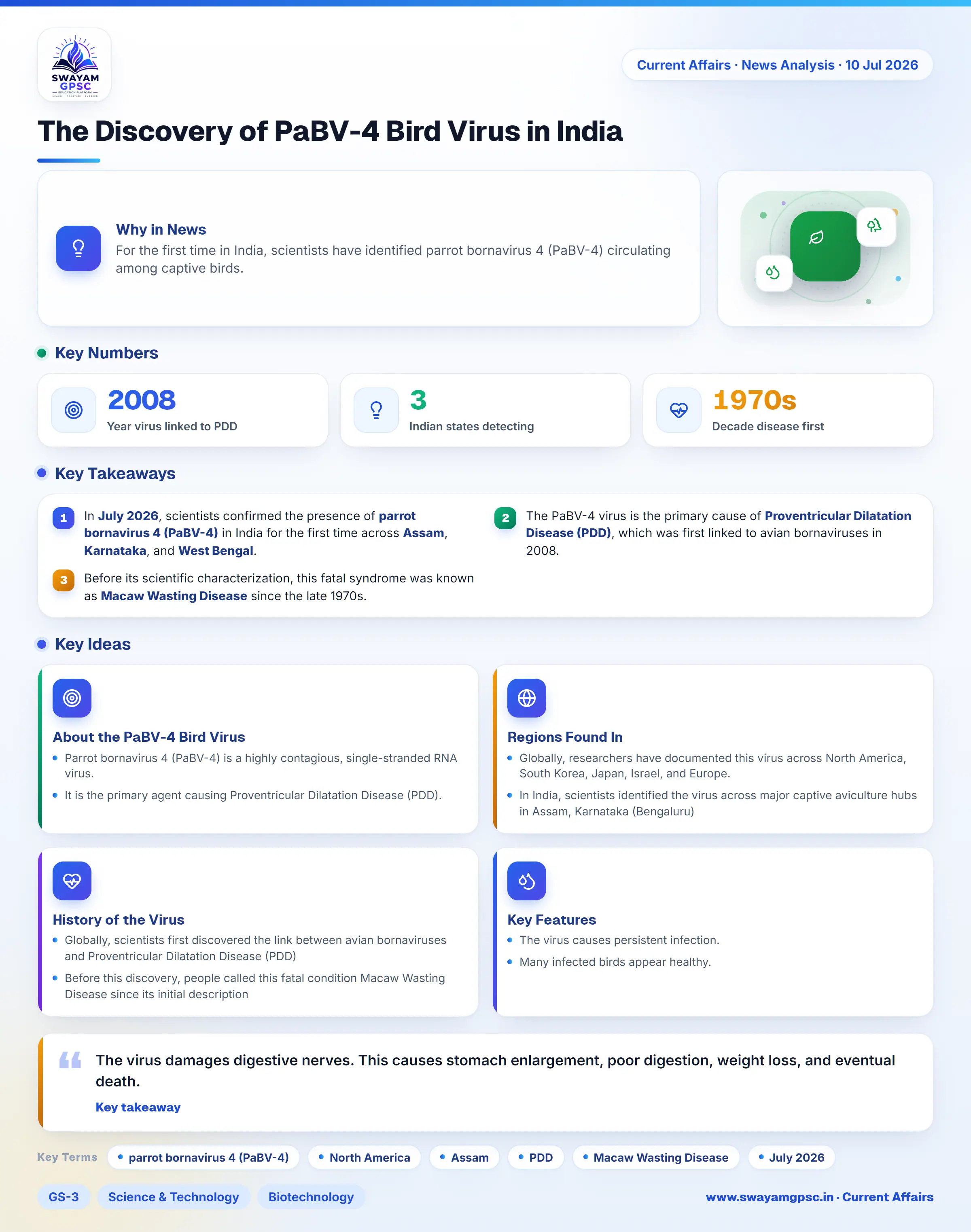
The Discovery of PaBV-4 Bird Virus in India
#GS-3 #Science & Technology #Biotechnology #Environment #Wildlife #GS-2 #Current Events #National
Key takeaways
- In July 2026, scientists confirmed the presence of parrot bornavirus 4 (PaBV-4) in India for the first time across Assam, Karnataka, and West Bengal.
- The PaBV-4 virus is the primary cause of Proventricular Dilatation Disease (PDD), which was first linked to avian bornaviruses in 2008.
- Before its scientific characterization, this fatal syndrome was known as Macaw Wasting Disease since the late 1970s.
Why in News
- For the first time in India, scientists have identified parrot bornavirus 4 (PaBV-4) circulating among captive birds.
About the PaBV-4 Bird Virus
- Parrot bornavirus 4 (PaBV-4) is a highly contagious, single-stranded RNA virus. It belongs to the species Orthobornavirus alphapsittaciforme.
- It is the primary agent causing Proventricular Dilatation Disease (PDD). This is a fatal neurological and gastrointestinal syndrome in parrots.
Regions Found In
- Globally, researchers have documented this virus across North America, South Korea, Japan, Israel, and Europe.
- In India, scientists identified the virus across major captive aviculture hubs in Assam, Karnataka (Bengaluru), and West Bengal (Kolkata).
History of the Virus
- Globally, scientists first discovered the link between avian bornaviruses and Proventricular Dilatation Disease (PDD) in 2008.
- Before this discovery, people called this fatal condition Macaw Wasting Disease since its initial description in the late 1970s.
- A study in July 2026 marks the first official confirmation of the virus circulating within the Indian subcontinent.
Key Features
- The virus causes persistent infection. It damages nerves through immune-driven inflammation rather than directly destroying cells.
- Many infected birds appear healthy. They silently shed the virus and spread infection throughout aviaries without visible symptoms.
- The virus spreads through contaminated food, water, saliva, and feces. It can also pass from infected parents to eggs.
- Doctors detect the virus using RT-PCR tests from cloacal swabs in live birds or brain tissues in dead birds.
Impacts of the Virus
- The virus damages digestive nerves. This causes stomach enlargement, poor digestion, weight loss, and eventual death.
- Silent transmission threatens captive breeding programmes. This puts vulnerable and endangered parrot species at risk of population decline.