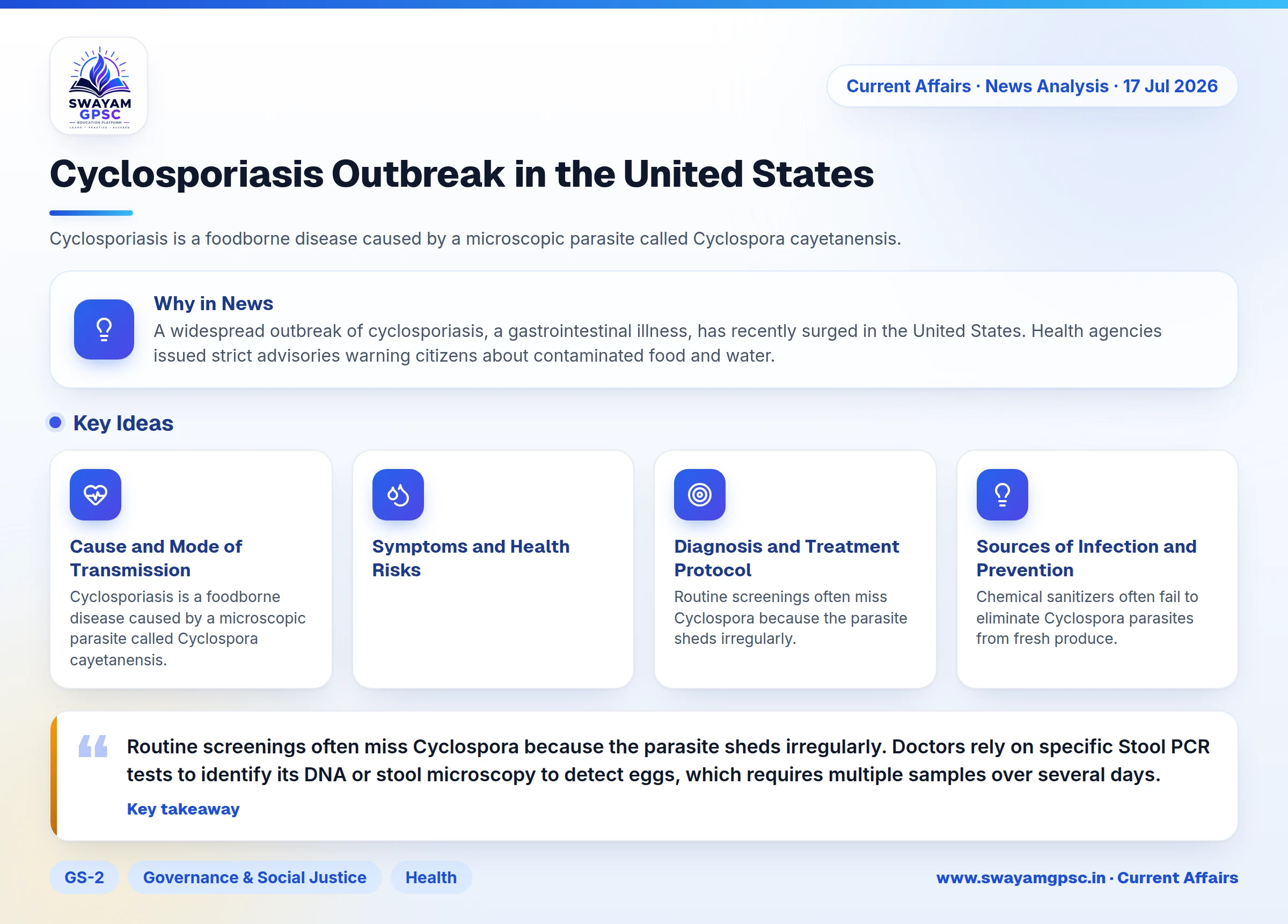
Cyclosporiasis Outbreak in the United States
#GS-2 #Governance & Social Justice #Health #GS-3 #Science & Technology #Biotechnology #Current Events #International #Cyclosporiasis #Foodborne Diseases
Why in News
- A widespread outbreak of cyclosporiasis, a gastrointestinal illness, has recently surged in the United States. Health agencies issued strict advisories warning citizens about contaminated food and water.
Cause and Mode of Transmission
- Cyclosporiasis is a foodborne disease caused by a microscopic parasite called *Cyclospora cayetanensis*.
- This infection spreads exclusively through the faeco-oral route when people consume food or water contaminated with fecal matter. It does not transfer directly from person to person.
Symptoms and Health Risks
- The primary symptom is prolonged watery diarrhoea, which usually comes with fatigue, weight loss, and stomach cramps. It poses a severe risk to immunocompromised individuals, the elderly, and children.
- Without proper treatment, this condition can trigger serious secondary health problems like malabsorption of nutrients, cholecystitis (gallbladder inflammation), and reactive arthritis (joint inflammation).
Diagnosis and Treatment Protocol
- Routine screenings often miss *Cyclospora* because the parasite sheds irregularly. Doctors rely on specific Stool PCR tests to identify its DNA or stool microscopy to detect eggs, which requires multiple samples over several days.
- Confirmed medical cases require a 7-10 day course of the antibiotic trimethoprim-sulfamethoxazole (TMP-SMX) along with aggressive hydration.
Sources of Infection and Prevention
- Past outbreaks and the current surge link cases heavily to eating contaminated raw fresh produce, including leafy greens, lettuce, spinach, basil, and cilantro.
- Chemical sanitizers often fail to eliminate *Cyclospora* parasites from fresh produce. Health authorities recommend thorough mechanical washing under clean running water and strict hand hygiene.