Conservation and Ecological Importance of Striped Hyenas
#GS-3 #Environment #Wildlife #Biodiversity #GS-2 #Current Events #National
Key takeaways
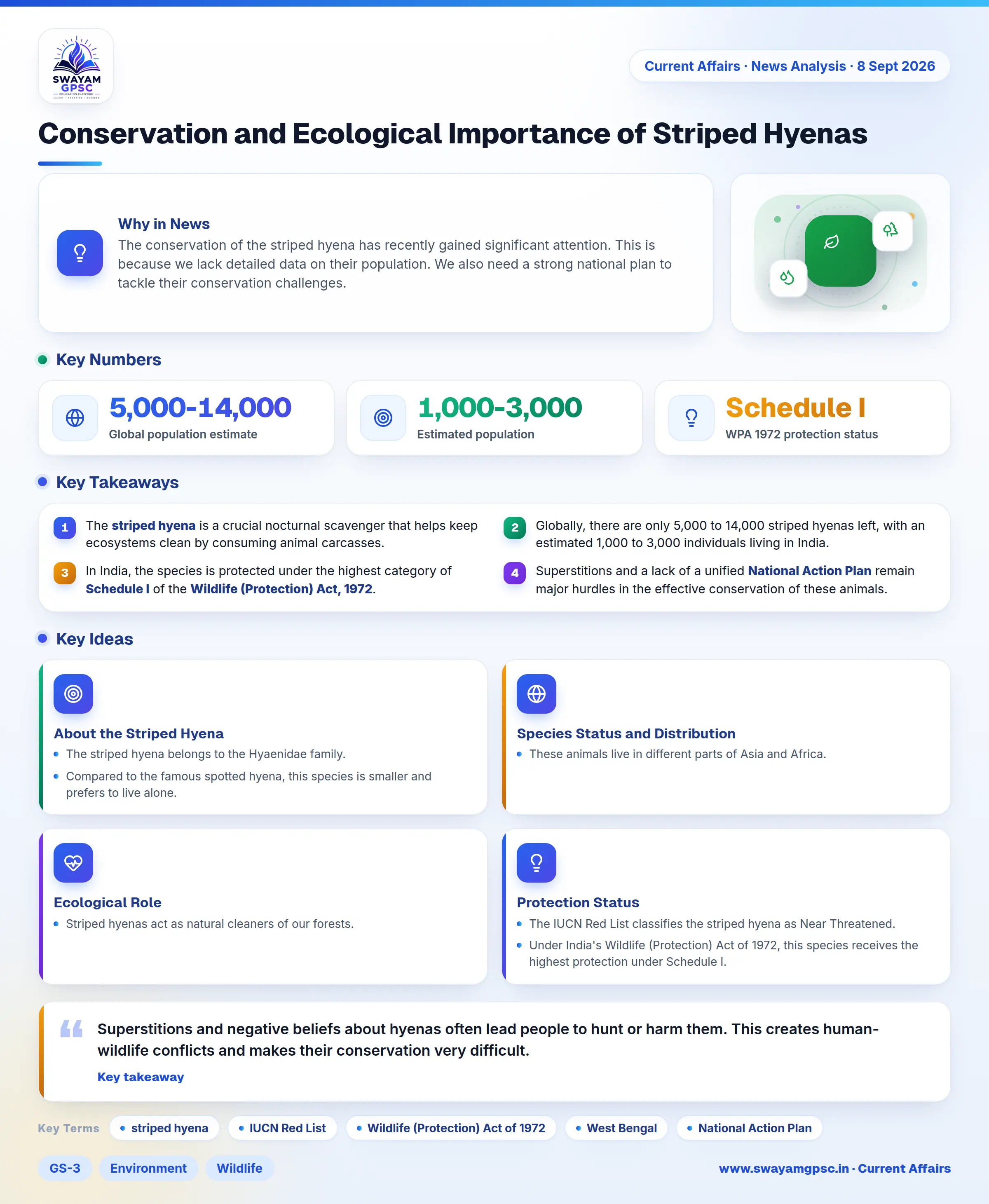
- The striped hyena is a crucial nocturnal scavenger that helps keep ecosystems clean by consuming animal carcasses.
- Globally, there are only 5,000 to 14,000 striped hyenas left, with an estimated 1,000 to 3,000 individuals living in India.
- In India, the species is protected under the highest category of Schedule I of the Wildlife (Protection) Act, 1972.
- Superstitions and a lack of a unified National Action Plan remain major hurdles in the effective conservation of these animals.
Why in News
- The conservation of the striped hyena has recently gained significant attention. This is because we lack detailed data on their population. We also need a strong national plan to tackle their conservation challenges.
About the Striped Hyena
- The striped hyena belongs to the Hyaenidae family. It is one of the three true hyena species in the world, alongside the brown hyena and spotted hyena. This family also includes another unique animal called the aardwolf.
- Compared to the famous spotted hyena, this species is smaller and prefers to live alone. It is mostly active at night and survives by scavenging dead animals.
Species Status and Distribution
- These animals live in different parts of Asia and Africa. Experts estimate that there are about 5,000 to 14,000 striped hyenas globally. India is home to around 1,000 to 3,000 of them, but the country lacks an official census for this species.
Ecological Role
- Striped hyenas act as natural cleaners of our forests. They eat dead animal carcasses and remove decaying remains from the wild. This scavenging habit keeps the ecosystem healthy by stopping the buildup of organic waste.
Protection Status
- The IUCN Red List classifies the striped hyena as Near Threatened.
- Under India's Wildlife (Protection) Act of 1972, this species receives the highest protection under Schedule I.
Challenges
- Superstitions and negative beliefs about hyenas often lead people to hunt or harm them. This creates human-wildlife conflicts and makes their conservation very difficult.
Need for a National Conservation Framework
- Currently, conservation efforts are scattered, with small projects running only in states like West Bengal and Tamil Nadu. India needs a coordinated National Action Plan to bring together research, funding, and protection efforts across all states.
Way Forward
- We must involve local communities and run awareness campaigns. Educational programs can help people understand the scientific importance of striped hyenas and encourage their protection.