Cash-Transfer Schemes and Their Fiscal Impact
#GS-3 #Economy #Growth #Budget #Taxation #GS-2 #Governance & Social Justice #Poverty #Social Justice #Vulnerable Sections
Key takeaways
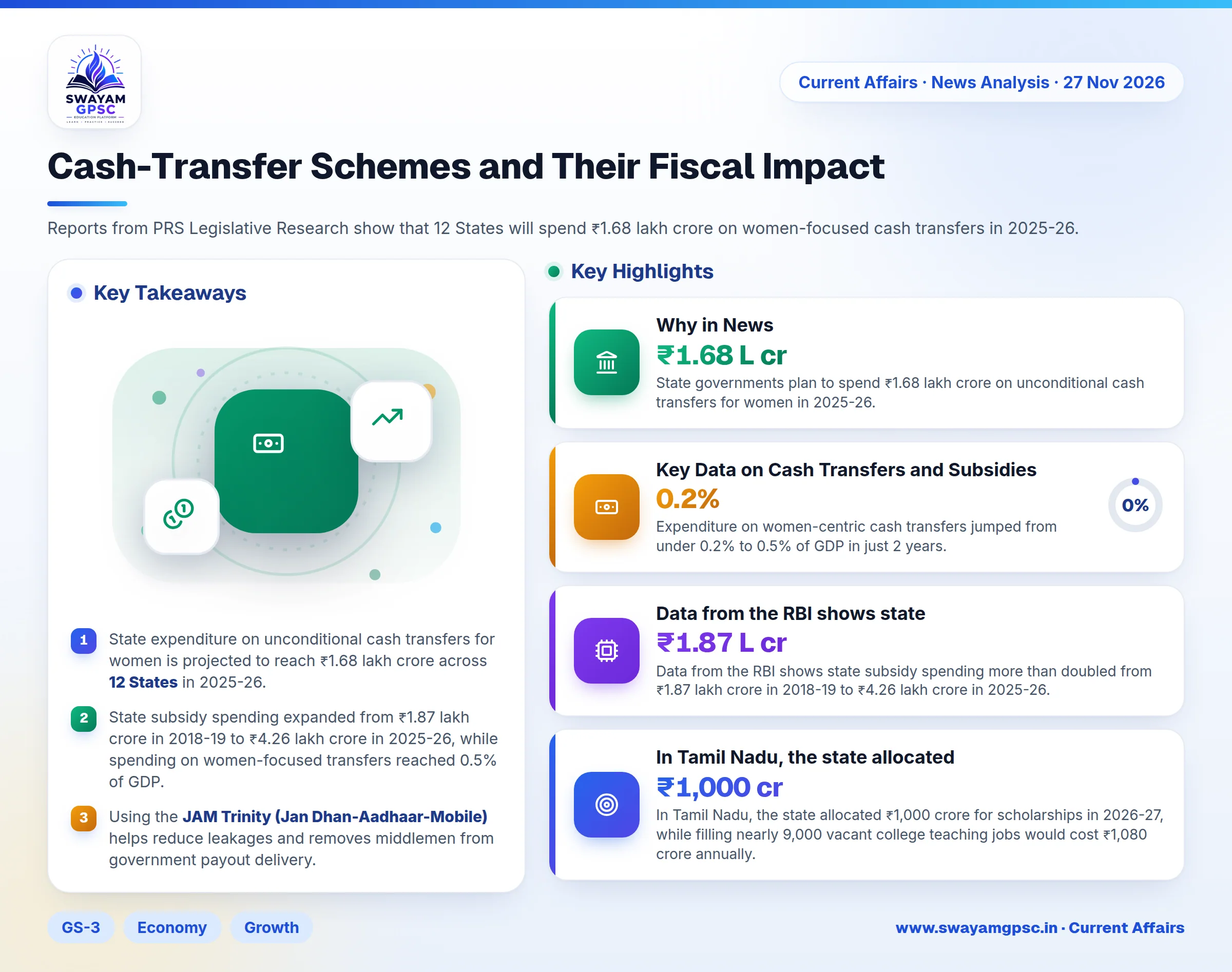
- State expenditure on unconditional cash transfers for women is projected to reach ₹1.68 lakh crore across 12 States in 2025-26.
- State subsidy spending expanded from ₹1.87 lakh crore in 2018-19 to ₹4.26 lakh crore in 2025-26, while spending on women-focused transfers reached 0.5% of GDP.
- Using the JAM Trinity (Jan Dhan-Aadhaar-Mobile) helps reduce leakages and removes middlemen from government payout delivery.
- Unchecked cash commitments strain state revenue balances and crowd out critical capital investments in healthcare, education, and infrastructure.
Why in News
- State governments plan to spend ₹1.68 lakh crore on unconditional cash transfers for women in 2025-26.
- This massive planned expenditure raises serious concerns about whether state budgets can support election-related freebies over time.
Understanding Cash-Transfer Schemes
- Cash transfer schemes send money directly into the bank accounts of beneficiaries without involving any middleman.
- Central and state governments use these transfers to give instant income support, lower poverty, and help families spend more on daily needs.
Key Data on Cash Transfers and Subsidies
- Reports from PRS Legislative Research show that 12 States will spend ₹1.68 lakh crore on women-focused cash transfers in 2025-26.
- Expenditure on women-centric cash transfers jumped from under 0.2% to 0.5% of GDP in just 2 years.
- Data from the RBI shows state subsidy spending more than doubled from ₹1.87 lakh crore in 2018-19 to ₹4.26 lakh crore in 2025-26.
- In Tamil Nadu, the state allocated ₹1,000 crore for scholarships in 2026-27, while filling nearly 9,000 vacant college teaching jobs would cost ₹1,080 crore annually.
Arguments Supporting Cash Transfers
- Direct payouts give immediate money to poor families, helping them handle sudden price hikes without taking high-interest informal loans.
- Sending funds straight to women improves their financial independence and gives them a bigger say in family spending decisions.
- Using the JAM Trinity (Jan Dhan-Aadhaar-Mobile) removes corrupt middlemen and stops money from going to fake accounts.
- Cash lets families spend on their most urgent needs, such as buying seeds, paying back debts, or covering medical emergencies.
- Poor households spend extra income quickly on basic goods, which boosts overall demand and supports small rural businesses.
Challenges and Concerns
- Unfunded cash promises increase state revenue deficits and force governments to reduce spending on long-term assets like hospitals and schools.
- Politicians often announce schemes quickly before elections without checking actual public needs or studying long-term financial impacts.
- Cash payments cannot replace essential public services, because money alone cannot fix poor schools or understaffed government hospitals.
- Universal schemes waste funds on rich households, while strict rules leave out poor people who lack proper identity documents.
- Family members might take control of the money deposited in a woman's account, and sudden cash influxes can drive up local market prices.
Way Forward
- Governments must prepare a public Social DPR before passing any large cash scheme to check its costs, benefits, and practical alternatives.
- Financial planning should estimate expenses 10 years into the future and include fixed expiry dates or graduation rules for beneficiaries.
- Payments should target specific vulnerable groups, including widows and people with disabilities, and adjust for inflation automatically.
- Administrations must run targeted registration drives so no poor family misses out due to missing bank details or paperwork.
- States should protect capital expenditure budgets to make sure cash transfers complement long-term social investments rather than replacing them.
Conclusion
- Direct cash transfers offer fast economic relief, but reckless expansion threatens public finances and cuts vital public infrastructure investments.
- Requiring initial project evaluations, continuous checking, and statutory expiry clauses will protect fiscal health while delivering real support.