Brain-Eating Amoeba Surge in Kerala
#GS-2 #Health #Current Events #National #Gujarat
Key takeaways
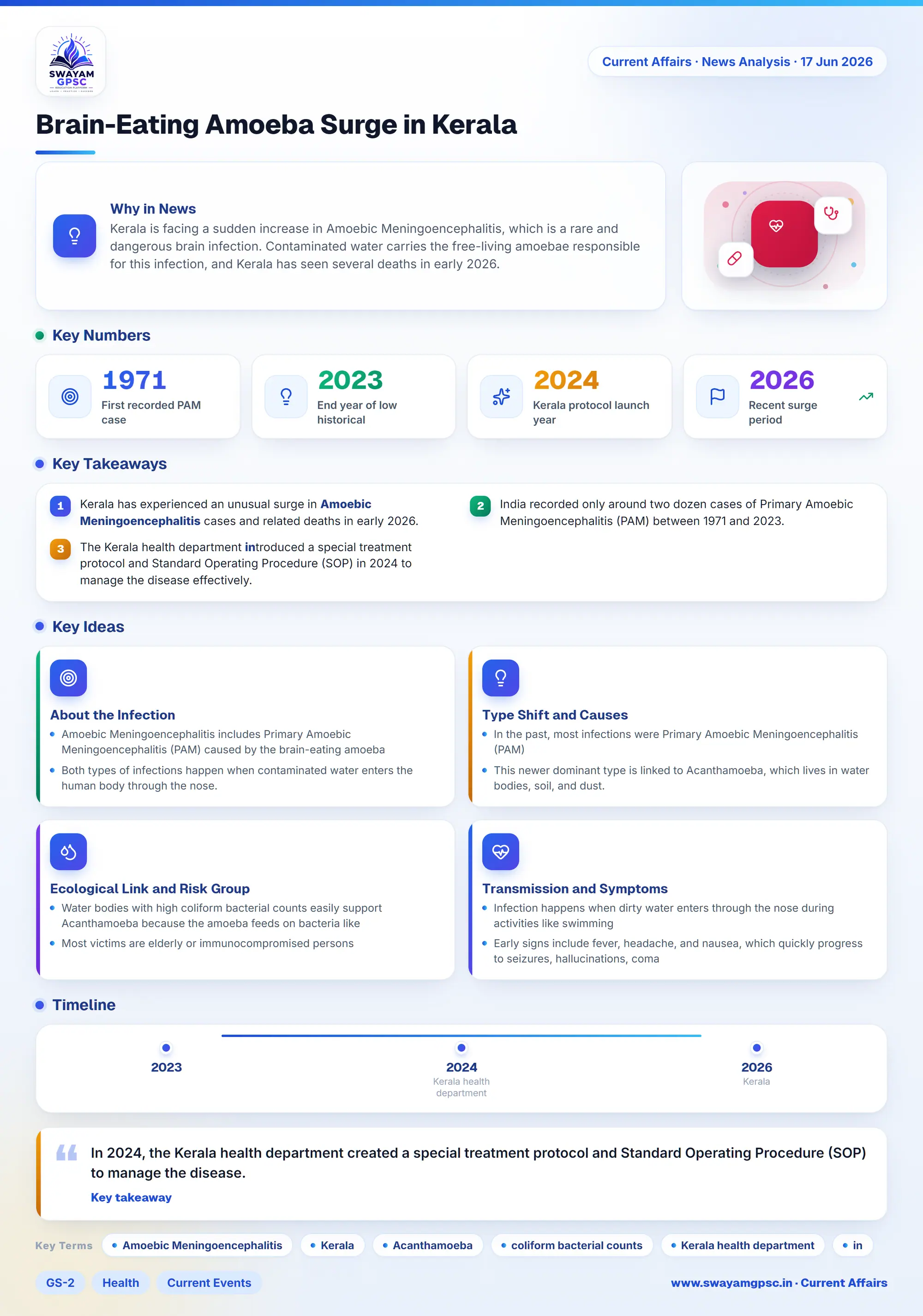
- Kerala has experienced an unusual surge in Amoebic Meningoencephalitis cases and related deaths in early 2026.
- India recorded only around two dozen cases of Primary Amoebic Meningoencephalitis (PAM) between 1971 and 2023.
- The Kerala health department introduced a special treatment protocol and Standard Operating Procedure (SOP) in 2024 to manage the disease effectively.
Why in News
- Kerala is facing a sudden increase in Amoebic Meningoencephalitis, which is a rare and dangerous brain infection.
- Contaminated water carries the free-living amoebae responsible for this infection, and Kerala has seen several deaths in early 2026.
- India reported only about two dozen cases of Primary Amoebic Meningoencephalitis (PAM) from the first recorded case in 1971 until 2023, making the current surge very unusual.
About the Infection
- Amoebic Meningoencephalitis includes Primary Amoebic Meningoencephalitis (PAM) caused by the brain-eating amoeba *Naegleria fowleri*, and Granulomatous Amoebic Encephalitis (GAE) caused by *Acanthamoeba*.
- Both types of infections happen when contaminated water enters the human body through the nose.
Type Shift and Causes
- In the past, most infections were Primary Amoebic Meningoencephalitis (PAM), but Granulomatous Amoebic Encephalitis (GAE) has now become the dominant type.
- This newer dominant type is linked to *Acanthamoeba*, which lives in water bodies, soil, and dust.
- Warm tropical climates, poor water quality, high coliform bacteria, and vegetated water bodies help the amoeba grow.
- High population density in Kerala leads to polluted water sources, and many homes have toilet pits placed too close to open wells.
Ecological Link and Risk Group
- Water bodies with high coliform bacterial counts easily support *Acanthamoeba* because the amoeba feeds on bacteria like *E. coli*.
- Most victims are elderly or immunocompromised persons, which makes them much more vulnerable to severe health complications.
Transmission and Symptoms
- Infection happens when dirty water enters through the nose during activities like swimming, but the disease does not spread person-to-person or through drinking water.
- Early signs include fever, headache, and nausea, which quickly progress to seizures, hallucinations, coma, and death within days without treatment.
Response and Treatment
- In 2024, the Kerala health department created a special treatment protocol and Standard Operating Procedure (SOP) to manage the disease.
- Kerala became the first state in India to do this, which helps doctors detect cases early and improves patient survival.