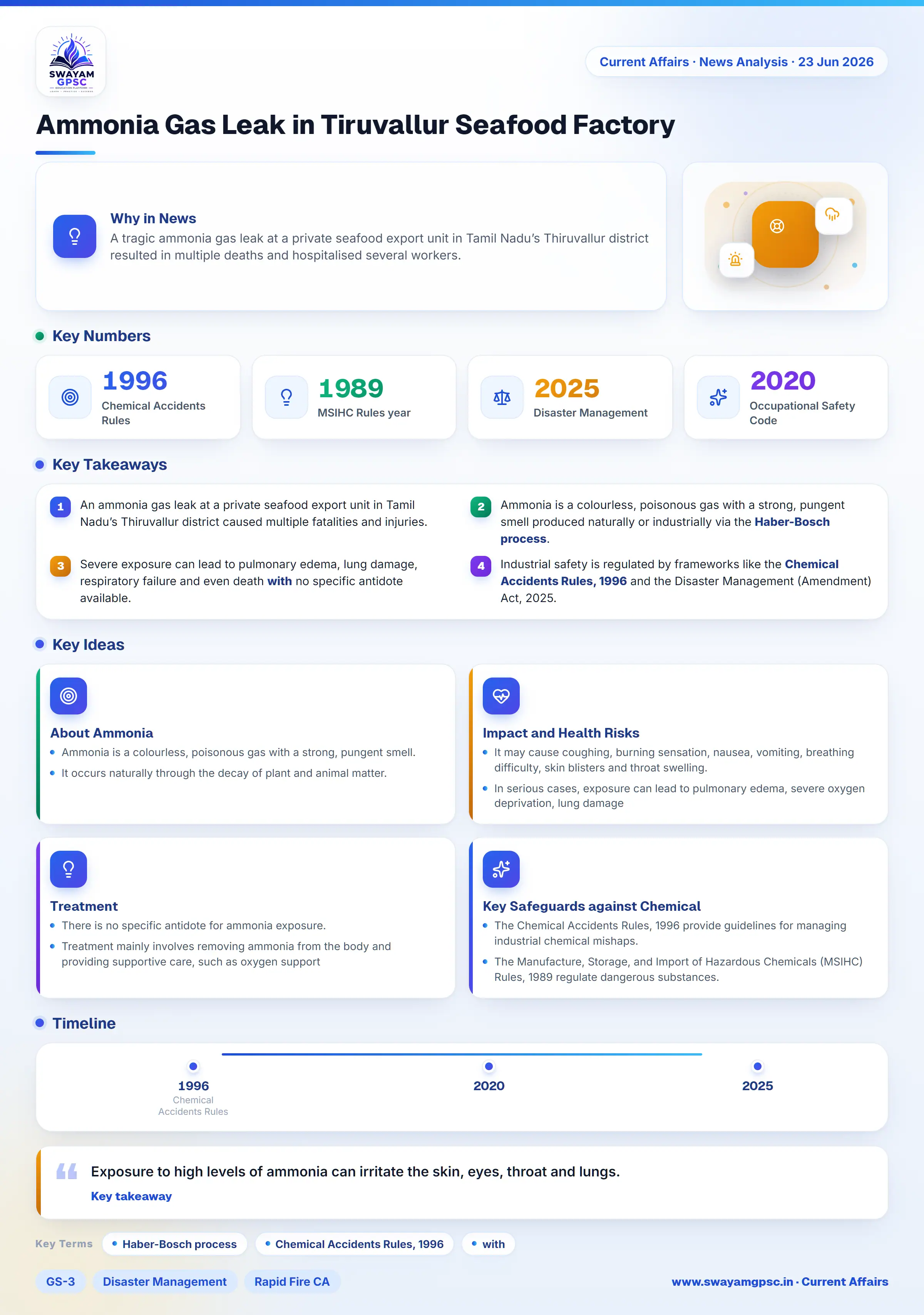
Ammonia Gas Leak in Tiruvallur Seafood Factory
#GS-3 #Disaster Management #Rapid Fire CA #Quick Facts For Prelims
Key takeaways
- An ammonia gas leak at a private seafood export unit in Tamil Nadu’s Thiruvallur district caused multiple fatalities and injuries.
- Ammonia is a colourless, poisonous gas with a strong, pungent smell produced naturally or industrially via the Haber-Bosch process.
- Severe exposure can lead to pulmonary edema, lung damage, respiratory failure and even death with no specific antidote available.
- Industrial safety is regulated by frameworks like the Chemical Accidents Rules, 1996 and the Disaster Management (Amendment) Act, 2025.
Why in News
- A tragic ammonia gas leak at a private seafood export unit in Tamil Nadu’s Thiruvallur district resulted in multiple deaths and hospitalised several workers.
About Ammonia
- Ammonia is a colourless, poisonous gas with a strong, pungent smell.
- It occurs naturally through the decay of plant and animal matter.
- It is also produced industrially through the Haber-Bosch process using nitrogen and hydrogen.
Impact and Health Risks
- Exposure to high levels of ammonia can irritate the skin, eyes, throat and lungs.
- It may cause coughing, burning sensation, nausea, vomiting, breathing difficulty, skin blisters and throat swelling.
- In serious cases, exposure can lead to pulmonary edema, severe oxygen deprivation, lung damage, respiratory failure and even death.
- Long-term exposure may increase the risk of chronic cough, asthma and lung scarring.
Treatment
- There is no specific antidote for ammonia exposure.
- Treatment mainly involves removing ammonia from the body and providing supportive care, such as oxygen support, respiratory management and treatment of skin or eye injuries.
Key Safeguards against Chemical and Industrial Disasters
- The Chemical Accidents Rules, 1996 provide guidelines for managing industrial chemical mishaps.
- The Manufacture, Storage, and Import of Hazardous Chemicals (MSIHC) Rules, 1989 regulate dangerous substances.
- The Chemical Accidents (Emergency, Planning, Preparedness and Response) Rules, 1996 focus on emergency readiness.
- The Disaster Management (Amendment) Act, 2025 strengthens legal frameworks for crisis handling.
- The Occupational Safety, Health and Working Conditions Code, 2020 protects workers on the job.
- The The Environment Protection Act (EPA),1986 safeguards natural surroundings and human life from hazardous impacts.