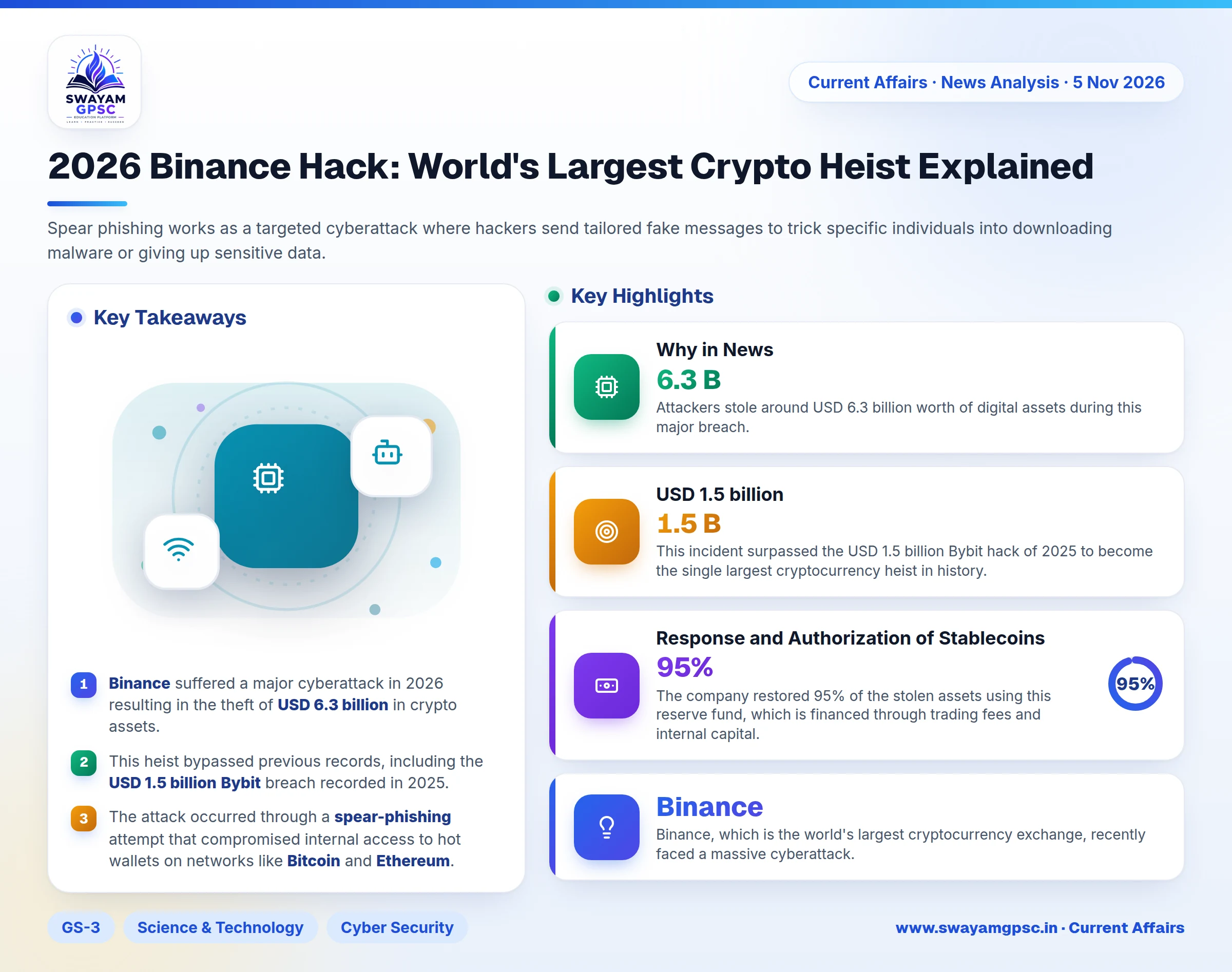
2026 Binance Hack: World's Largest Crypto Heist Explained
#GS-3 #Science & Technology #Cyber Security #ICT #Rapid Fire CA #Quick Facts For Prelims #IT & Computers
Key takeaways
- Binance suffered a major cyberattack in 2026 resulting in the theft of USD 6.3 billion in crypto assets.
- This heist bypassed previous records, including the USD 1.5 billion Bybit breach recorded in 2025.
- The attack occurred through a spear-phishing attempt that compromised internal access to hot wallets on networks like Bitcoin and Ethereum.
- The exchange covered 95% of user losses by deploying its emergency fund named Secure Asset Fund for Users (SAFU).
- Policymakers are advocating for the formal authorization of stablecoins supported by strict Anti-Money Laundering (AML) compliance.
Why in News
- Binance, which is the world's largest cryptocurrency exchange, recently faced a massive cyberattack.
- Attackers stole around USD 6.3 billion worth of digital assets during this major breach.
- This incident surpassed the USD 1.5 billion Bybit hack of 2025 to become the single largest cryptocurrency heist in history.
Modus Operandi and Targeted Assets
- Hackers executed the security breach using a targeted technique known as spear-phishing.
- A Binance engineer accidentally downloaded a code repository containing malware on their laptop.
- This malware gave attackers unauthorized access to internal company systems and internet-connected hot wallets.
- Spear phishing works as a targeted cyberattack where hackers send tailored fake messages to trick specific individuals into downloading malware or giving up sensitive data.
- The attackers primarily targeted and stole digital assets hosted on the Ethereum, Bitcoin, Avalanche, and Polygon blockchains.
Response and Authorization of Stablecoins
- Binance managed the crisis by using its emergency reserve called the Secure Asset Fund for Users (SAFU).
- The company restored 95% of the stolen assets using this reserve fund, which is financed through trading fees and internal capital.
- Policymakers should evaluate the authorization of stablecoins to deal with concerns about unbacked and volatile digital coins.
- The authorization of stablecoins means creating a clear legal framework to regulate cryptocurrencies pegged directly to real-world assets like fiat currency or gold.
- Under this setup, stablecoin issuers must keep transparent audited reserves, obey strict Anti-Money Laundering (AML) laws, and operate safely inside the formal financial system.