RBI MPC Increases Repo Rate to 5.50%
#GS-3 #Economy #Banking Sector & NBFCs #Monetary Policy #Infrastructure
Key takeaways
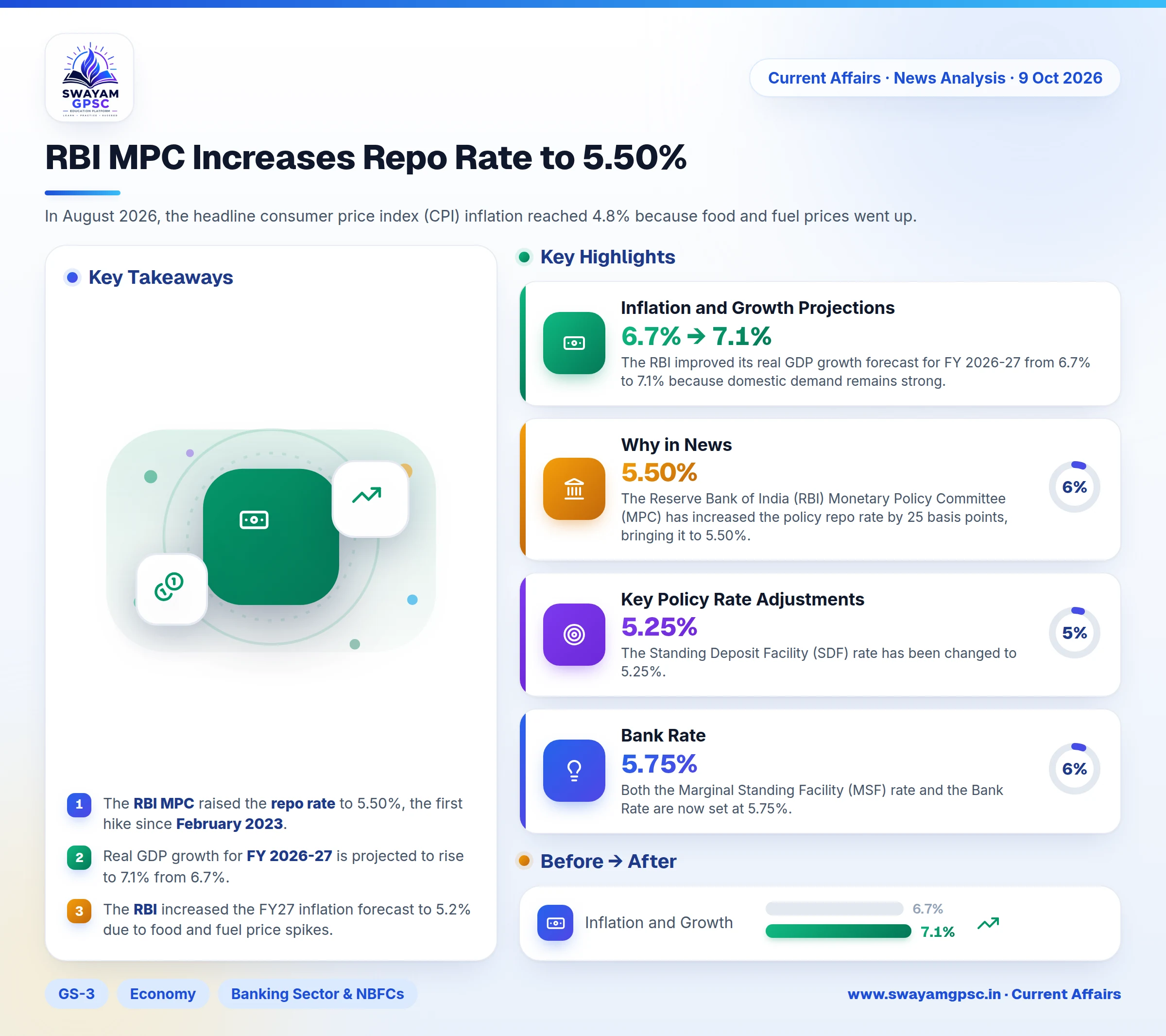
- The RBI MPC raised the repo rate to 5.50%, the first hike since February 2023.
- Real GDP growth for FY 2026-27 is projected to rise to 7.1% from 6.7%.
- The RBI increased the FY27 inflation forecast to 5.2% due to food and fuel price spikes.
- Crude oil prices exceeding USD 100 per barrel and El Niño are major external risks causing inflation.
Why in News
- The Reserve Bank of India (RBI) Monetary Policy Committee (MPC) has increased the policy repo rate by 25 basis points, bringing it to 5.50%.
- This is the first time the committee has raised rates since February 2023.
- The MPC has also changed its official policy stance to calibrated tightening to fight continuous inflation.
Key Policy Rate Adjustments
- The Standing Deposit Facility (SDF) rate has been changed to 5.25%.
- Both the Marginal Standing Facility (MSF) rate and the Bank Rate are now set at 5.75%.
Inflation and Growth Projections
- The RBI has increased its inflation forecast for FY27 by 20 basis points, projecting it at 5.2%.
- In August 2026, the headline consumer price index (CPI) inflation reached 4.8% because food and fuel prices went up.
- The projection for core inflation for FY27 is 4.4%.
- The RBI improved its real GDP growth forecast for FY 2026-27 from 6.7% to 7.1% because domestic demand remains strong.
Understanding Calibrated Tightening
- This term means the central bank will raise interest rates or reduce money supply in a slow and measured way instead of using aggressive hikes.
- This acts as a signal to the market that the RBI will not cut rates in the near future.
- The RBI will now study the effects of past hikes, inflation data, and how supply shocks affect the economy before making more decisions.
Challenges
- Inflation is spreading to more items. In August 2026, about 37% of CPI items had inflation higher than 4%.
- Poor south-west monsoon and El Niño conditions have hurt farming. Also, reservoir levels are 20% lower than last year.
- Droughts in many states have caused food prices to jump, especially for onions and sugar.
- The West Asia conflict is disrupting global supply chains. Crude oil prices above USD 100 per barrel could bring more inflation into India.
- The gap between interest rates in India and the US has shrunk because the US Federal Reserve is keeping rates high.
- Increasing the rate helps stop foreign investors from taking their money out and protects the value of the Indian Rupee.